


Quick answer
Magnetic locks use electromagnetic force to secure a door and release it when power is removed. Electric strikes work with a mechanical latch and can be fail-safe or fail-secure. OUBAO manufactures commercial magnetic locks with holding forces from 180 kg to 700 kg. Our 106,000 m² manufacturing base can produce more than 2 million magnetic lock sets annually.
How Do Magnetic Locks and Electric Strikes Work?
A magnetic lock is one that uses a metal armature plate on the door and an electromagnet on the frame. When you power the magnet, it pulls the plate toward itself to keep the door closed. Cutting the power leads to the release of the lock.
In contrast, an electric strike works with the regular latch of the door. Sitting inside the frame, it holds the latch in place when someone locks the door. When you grant electronic access or buzz someone in, the latch is released so the door can open.
That means a magnetic lock needs power to stay locked and unlocks automatically when the power goes out. But electric strikes are either fail-secure or fail-safe. A fail-secure strike stays locked from the outside, whereas a fail-safe strike unlocks when the power goes out.
What Is the Difference Between a Magnetic Lock and an Electric Strike?
Continuous power is needed by a magnetic lock to keep the door shut, but this lock does not have any moving parts inside it. An electric strike contains moving parts and uses the door’s mechanical latch to perform its function.
The type of door can narrow down your decision. Metal and wood doors typically suit electric strikes, as long as the existing latch and frame accommodate the strike. Maglocks are common on commercial entrances and glass doors. You can conceal these or mount them on the surface, depending on your preference.
There are fewer moving parts to wear on maglocks, whereas electric strike users keep the existing mechanical lockset and add electronic access to it.
When Should You Choose a Magnetic Lock?
Magnetic locks work well on busy doors because there are no moving locking parts to wear with every opening. They’re also common on glass doors, where suitable brackets can secure the hardware without cutting a strike into the frame.
Holding force changes with the job. OUBAO offers models from 180 kg for lighter applications up to 700 kg at the top of its range.
A commercial magnetic door lock system can connect to card readers, keypads, access controllers, and different release devices. A magnetic door lock with button release cuts power directly or sends a release signal through the controller. A magnetic door lock with key typically uses a keyed switch to release the lock.
Remote operation works in much the same way. A magnetic door lock with remote control uses a receiver to trigger the release without someone standing at the door.
When Is an Electric Strike a Better Choice?
An electric strike is better when you want electronic access while keeping the door’s mechanical lockset or latch. You can fit these to hollow-metal door frames or wood that can accommodate the strike.
Strikes that are fail-secure by nature stay locked from the entry side if the power goes out, but the mechanical hardware still lets the individuals inside to exist. You can also choose fail-safe electric strikes, but make sure to evaluate the required power behavior before ordering.
There’s no single best electric magnetic door lock for each entrance. Beginning with the door itself and then considering access controls, security, and what should happen during a power failure is how you choose the right type for your project.
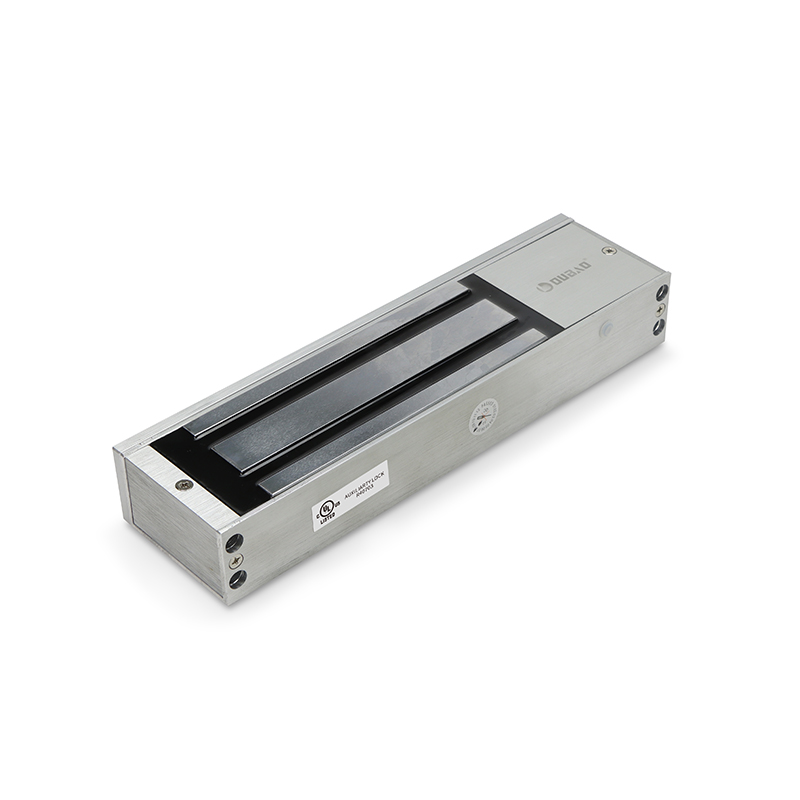
- Holding Force500kg (1200lbs)
- MaterialReinforced high-strength aluminum alloy
- CertificationsUL Listed, CE, FCC, RoHS, REACH
What Comes in a Magnetic Door Lock Kit?
A magnetic door lock kit has an electromagnet and a matching armature plate. Based on the specific package, it may also include:
- A 12V or 24V power supply
- Mounting brackets
- Access controller
- Exit devices
- Keypad or card reader
Check with the manufacturer for what’s included before placing an order. Otherwise, you may get the right lock but the wrong power supply or bracket, forcing you to buy extra hardware.
What Should You Know About Magnetic Door Lock Installation?
Proper magnetic door lock installation starts with alignment. The armature needs flat contact with the magnet. Even a gap between the two surfaces can reduce the lock’s holding performance.
The bracket depends on the opening. L-brackets can help with certain outswinging installations, Z-brackets are commonly used for inswinging doors, and U-shaped clamps can mount hardware to frameless glass. A concealed magnetic door lock keeps the hardware recessed inside the door or frame when appearance is important.
For egress doors, the release setup matters as much as the lock. Check local fire, electrical, accessibility, and building codes before installation.
What Magnetic Locks Does OUBAO Offer for Commercial Projects?
OUBAO manufactures both magnetic locks and electric strikes for commercial access-control projects. Its magnetic lock range includes single- and double-door models, with holding-force options from 50 kg to 500 kg. The OB500 Series, for example, provides 500 kg of holding force and operates on either 12V or 24V DC.
OUBAO also handles OEM and ODM orders for buyers that need customized magnetic locking hardware. Our manufacturing base has annual capacity for more than 2 million magnetic lock sets, making us suitable for both private-label programs and larger commercial projects.
For an electric magnetic door lock project, start with the door type, power-loss behavior, and access-control setup. Then check the required holding force or strike configuration, mounting hardware, and local code requirements.