


Quick Answer
A magnetic lock uses electricity to create a magnetic field between an electromagnet on the frame and a metal armature plate on the door. When the magnet receives power, it pulls the plate toward it and holds the door shut. Cutting the power tends to release a fail-safe maglock.
What Happens Inside a Magnetic Lock?
Firstly, understand that no bolts move in and out of the door. Rather, electromagnetism is what gives the unit its locking force.
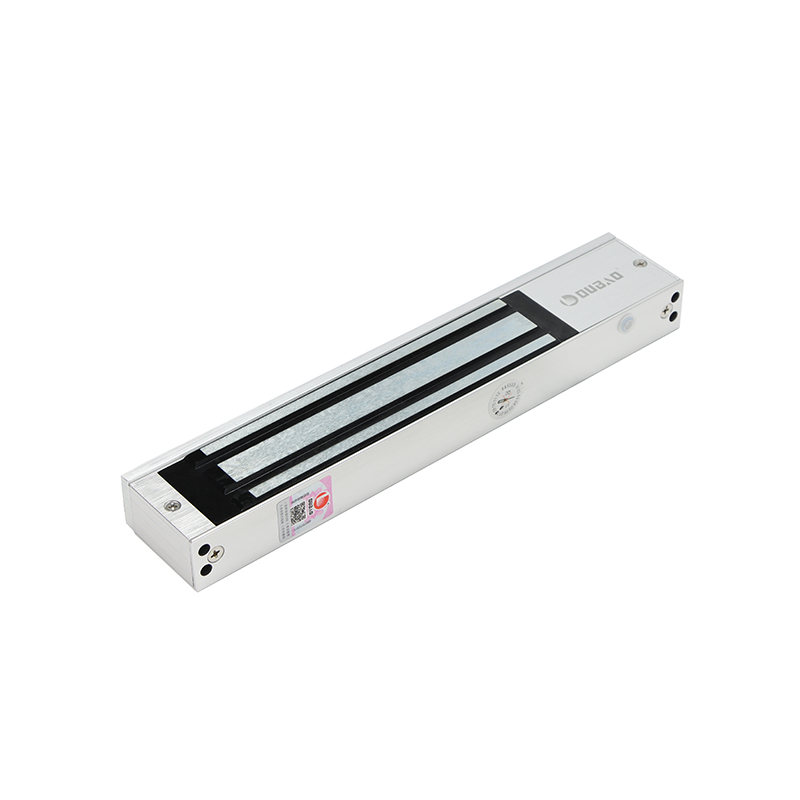
Two main parts of the lock are an electromagnet and an armature plate. As electricity reaches the electromagnet, it forms a magnetic field that pulls the plate toward it and keeps the door shut. As long as the magnet has power, the door remains locked.
OUBAO’s CK280 Series works on this same principle. Its silicon steel lamination core creates the magnetic force, providing 280 kg (600 lbs) of holding force. The lock runs on 12V DC as standard, with 24V DC available on request.
Once the power is cut, the magnetic force disappears and the door releases. That’s why the CK280 is described as fail-safe, or “power off to unlock.”
- Holding Force280kg (600lbs)
- ApplicationCommercial & residential doors
- CertificationsCE, FCC, RoHS, REACH
What Happens When Someone Wants to Open the Door?
The exact sequence depends on the way access control has been set up, An individual might enter a card, present a card, or use another credential. After granting access, the system interrupts power to the magnet in order to help open the door.
Leaving can be simpler. With a magnetic door lock with button release, pressing the exit button tells the system to release the lock. After the person passes through and the door closes, power can return to the magnet and secure the door again.
A magnetic door lock with key can use a key-operated electrical switch for release, while a magnetic door lock with remote control adds a way to trigger release from a distance. The release method changes, but the magnet still works on the same basic power-on, power-off principle.
What Else Is Part of the System?
The part that physically holds the door shut is the access control magnetic door lock. This lock usually works alongside a controller, reader or keypad, and a power supply, and has some way to release the door.
Each part has a different function. The controller decides whether to grant access, whereas the reader checks the code, card, or other credential. If access is granted, the system releases the maglock so the individual can open the door.’
Some manufacturers bundle these parts together to create a magnetic door kit lock. In larger buildings, installers typically prefer a commercial magnetic door lock system for controlling various entrances from one setup.
This becomes more important with door access control systems for business, where you’re managing who can enter different doors rather than simply choosing a magnet with enough holding force.
Do All Magnetic Locks Work the Same Way?
Although the basic principle stays the same across different models, the features can vary.
For example, some of OUBAO’s variants offer signal output that can report lock status. Others provide a 0-10 second time-delay adjustment. Certain versions also leverage indicator lights, including green for unlocked and red for locked.
Those features don’t create the magnetic holding force. They give the wider access-control system more information or control over what happens at the door.
Holding force can vary too. A stronger rating means the magnet can resist greater separating force when properly installed, but it doesn’t change how the magnet actually works.
How Is a Magnetic Lock Installed?
Magnetic door lock installation begins with getting the armature plate and magnet into positions where they can meet after the door closes.
The exact arrangement depends on the lock and door. For example, the CK280 range by OUBAO includes mortise and hanging installation options. You also get glass, metal, and wood door options, giving you the flexibility to choose based on your current need.
This is why the holding-force number isn’t enough when choosing a lock. You need an installation method that works with the door in front of you.
What Should You Check Before Buying a Magnetic Lock?
Start with the basics: holding force, voltage, door type, installation method, and what happens when power is lost. Then look at any extra features you actually need, such as a lock-status signal, indicator light, or release delay.
When reading access control magnetic door lock reviews, check whether the person is talking about the magnet or the entire setup. A problem with the reader, controller, power supply, or installation can easily be blamed on the lock.
For a beginner, the easiest way to remember how a maglock works is simple: power reaches the electromagnet, the magnet grabs the armature plate, and the door stays locked. Once that power is cut, a fail-safe magnetic lock lets go.