

Quick Answer:
Choose a fail-safe lock when the secure side needs to unlock if power is lost, and a fail-secure lock when the secure side needs to remain locked. Conventional magnetic locks are fail-safe, so OUBAO’s magnetic locks use this design. If you need fail-secure operation, OUBAO’s OB-13 electric bolt lock provides it, while the OB-18 is available in either mode.
What Is the Difference Between Fail-Safe and Fail-Secure Locks?
A fail-safe lock unlocks on the secure side when electrical power is removed. A fail-secure lock, on the other hand, remains locked on the secure side when power is lost.
Power is required by a fail-safe lock to stay locked. Once the power goes out, its locking mechanism releases. A fail-secure lock works the opposite way, staying locked from the outside when power is lost and using electricity to allow authorized entry.
However, this only explains what happens to the lock during a power loss. It doesn’t necessarily tell you whether someone inside can exit, since egress behavior also depends on the locking hardware and complete door arrangement.
So, when choosing a fail safe vs fail secure lock, start with one practical question: What should happen to the door if the lock loses power?
Are Magnetic Locks Fail-Safe or Fail-Secure?
Most conventional electromagnetic locks are fail-safe, requiring electrical power to develop and maintain the magnetic bond that keeps the door closed. If you remove that power, the bond is going to disappear.
This is the reason why a maglock fail safe design releases during an outage. Conventional electromagnetic locks are inherently fail-safe because their holding force depends on continuous power; they cannot maintain a magnetic bond when power is removed.
OUBAO’s magnetic lock range follows this fail-safe operating principle. OUBAO also states that its DT4-C pure iron construction provides 1.5x standard holding force.
You can read more about the operating principle in our guide to how an access control magnetic door lock works.
When Should You Choose a Fail-Safe Lock?
Choose a fail-safe lock when the locking device needs to release if it loses power. A fail safe magnetic lock provides this behavior by design because its holding force depends on a continuous electrical supply.
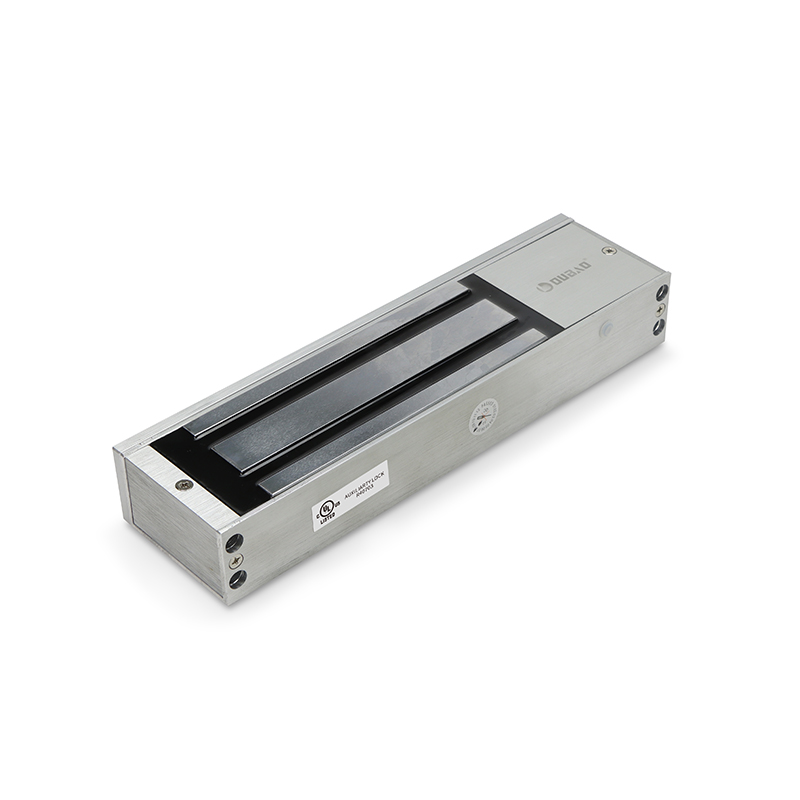
Once you’ve decided that fail-safe is right for the opening, you can look at the holding force you need. OUBAO’s OB280 magnetic lock provides 280 kg (600 lbs) of holding force. The larger OB500 magnetic lock provides 500 kg (1,200 lbs) of holding force. Both are fail-safe, so removing power releases the lock.
Holding force isn’t the only thing to check. You still need to consider the door construction and the requirements that apply to the opening, including any relevant access-control, fire, and egress requirements.
- Holding Force500kg (1200lbs)
- MaterialReinforced high-strength aluminum alloy
- CertificationsUL Listed, CE, FCC, RoHS, REACH
When Should You Choose a Fail-Secure Lock?
Choose fail-secure when you need the access side of the door to remain locked during a power outage. A conventional magnetic lock can’t serve as a fail secure magnetic lock because its magnetic bond disappears without power. For fail-secure operation, you’ll need a different type of electrified locking hardware.
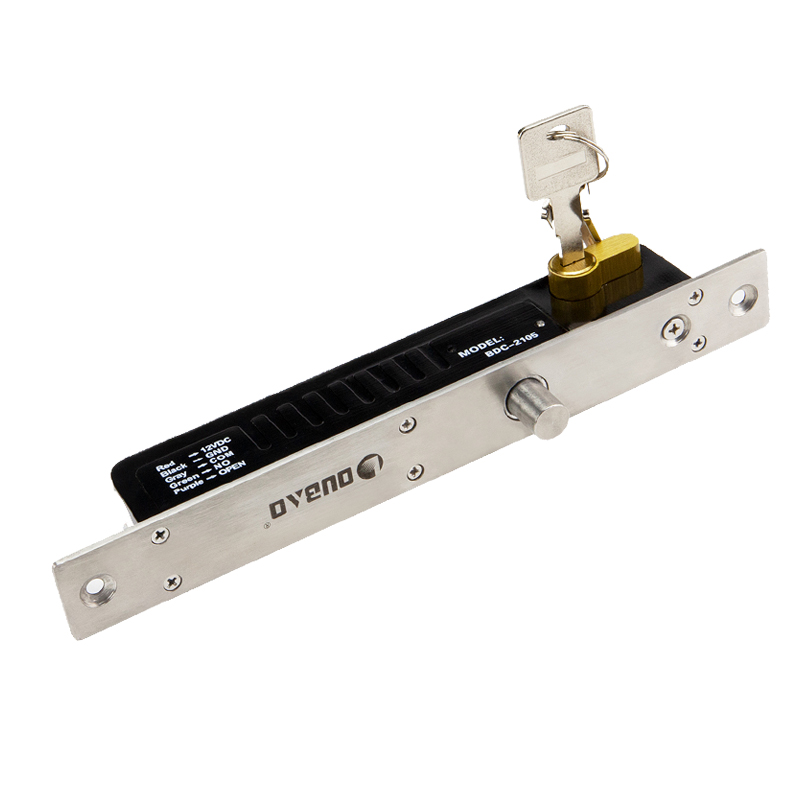
OUBAO’s electric bolt lock range includes the OB-13, a dedicated fail-secure model. When power is lost, the bolt remains extended, and the secure side stays locked.
Fail-secure doesn’t automatically mean people can’t get out. With standard electromechanical hardware, the access side can remain secured while the appropriate mechanical hardware still provides free egress from inside. The exact arrangement still needs to meet the requirements for that particular opening.
For another comparison of common access-control hardware, see our guide to electric magnetic door locks vs. electric strikes.
- TypeFail-secure electric bolt lock
- ApplicationAccess control systems
- SecurityRemains locked during power outages
Can One Lock Support Both Fail-Safe and Fail-Secure Modes?
Yes, although the required operating mode may need to be selected when you order the lock.
OUBAO’s OB-18 electric bolt lock is available with fail-safe and fail-secure operation. This gives project buyers another option when different openings call for different power-loss behavior. Check the specific OB-18 configuration when ordering to make sure it provides the mode required for the project.
This gives distributors and project buyers a single electric bolt platform that can cover different project requirements. For an opening that needs to release without power, order the fail-safe version. If it needs to remain secured from the access side, order the fail-secure version.
It’s an important distinction because “available in both modes” doesn’t necessarily mean a lock is field-switchable.
Does a Fail-Safe Lock Automatically Unlock During a Fire Alarm?
Not necessarily. Fail-safe describes what happens when power to the lock is removed. A fire alarm is a separate system event, and whether it causes the lock to release depends on the access-control setup and the requirements that apply to the opening.
If the system cuts power to a conventional magnetic lock, the lock releases because it is fail-safe. But the term “fail-safe” by itself doesn’t tell you whether a particular fire-alarm event has been configured or is required to cut that power.
Fire-alarm integration and emergency-release requirements can vary depending on the type of opening, locking arrangement, applicable code, and jurisdiction. That’s why these requirements should be checked as part of the complete access-control design rather than assumed from the lock’s fail-safe designation alone.
Is Fail-Safe Better Than Fail-Secure?
Neither option is better for every door. The right choice depends on what you need the lock to do when power is lost.
If the locking device needs to release, choose fail-safe. If you need the access side to remain locked, fail-secure may be the better choice, provided the complete door arrangement meets the applicable egress and safety requirements.
This is why choosing based only on which term sounds safer or more secure can lead you to the wrong hardware. Start with the required power-loss behavior and work from there.
How Do You Choose Between Fail-Safe and Fail-Secure?
Your first step is to identify the required power-loss behavior. If the door needs to release, choose fail-safe hardware. If the access side needs to remain secured, look for suitable fail-secure hardware.
For magnetic locking, OUBAO offers the fail-safe OB280 with 600 lbs of holding force and the OB500 with 1,200 lbs. If your project calls for fail-secure operation instead, the OB-13 electric bolt lock provides it. The OB-18 gives you another option because it can be ordered in either fail-safe or fail-secure configuration.
From there, match the hardware to the door construction, required holding force, access-control system, and applicable fire and egress requirements. For the fail safe vs fail secure lock decision, the simplest place to start is also the most important: decide what the lock needs to do when the power goes out.