

Quick Answer
Specify a parallel arm door closer when there is no usable headroom above the door — a low ceiling, an exit sign, or conduit sitting where the closer body would normally go. The body mounts on the door leaf and the arm folds back along the frame, so the door clears the obstruction. It also suits narrow frames on aluminum storefront doors. If headroom is open and you want maximum leverage, a top jamb door closer is usually the simpler spec.
If you buy door closers for a door-control brand or a building-hardware range, the mounting style decides the SKU, the bracket list and the price. This guide covers when parallel arm mounting is the right call, how it differs from top jamb and standard mounting, and what to confirm before it goes on a quotation.
What Is a Parallel Arm Door Closer? (Plain English)
Which door closer mounting types do you choose between?
Mounting type is where the hydraulic body sits and how the arm links that body to the door or frame. Surface-mounted commercial closers usually come in three arrangements:
- Standard (regular) arm: body on the pull side of the door, arm shoe on the frame header.
- Top jamb: body bolted to the frame header above the door, arm shoe on the door leaf.
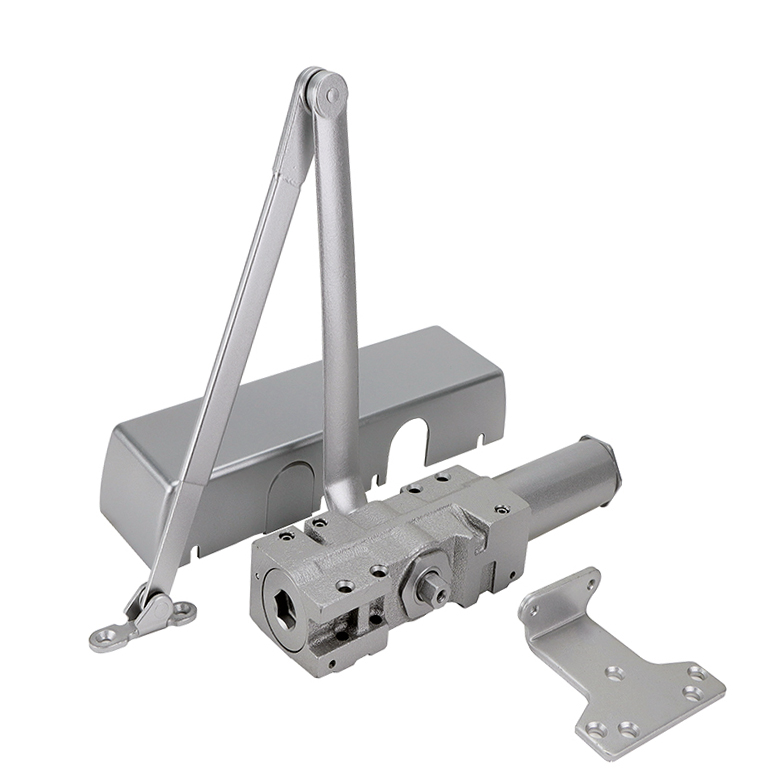
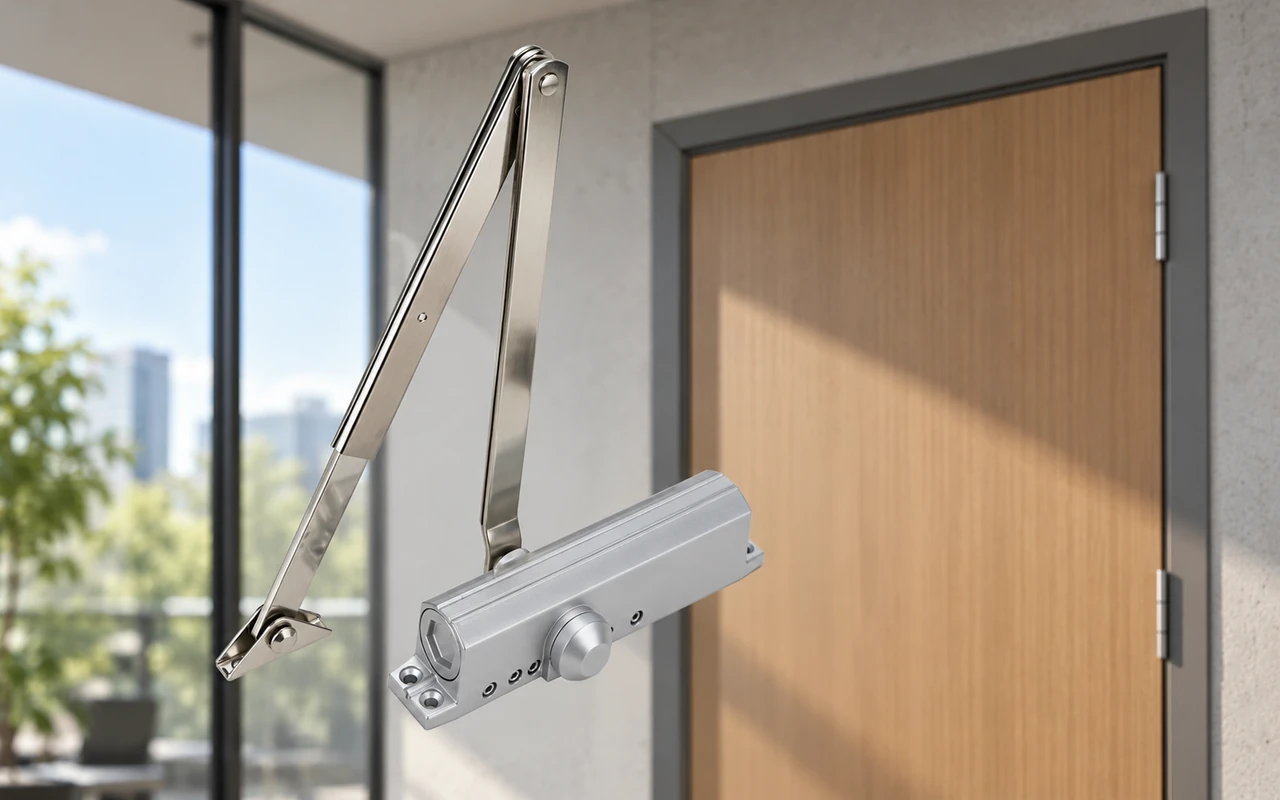
- Parallel arm: body on the door leaf, arm shoe on the frame, with the arm sitting roughly parallel to the frame when the door is closed.
OUBAO publishes the supported installation styles for every sub-model, and most surface-mounted series list standard, parallel and top jamb together. Because the arm geometry differs, the same body does not always deliver the same usable power size in every position, so compare mounting first and price second. The door closer collection shows how the options sit across the range.
What is a PA bracket, and why does it appear on the order line?
A parallel arm (P.A.) bracket is the extra hardware that lets the closer mount parallel to the frame. On the 9016 adjustable power door closer, parallel installation is listed as supported, with the P.A. bracket provided on request.
- Residential & Apartments : Entrance doors, common areas and multi-family housing This series is designed for various door types, including wooden and metal doors.
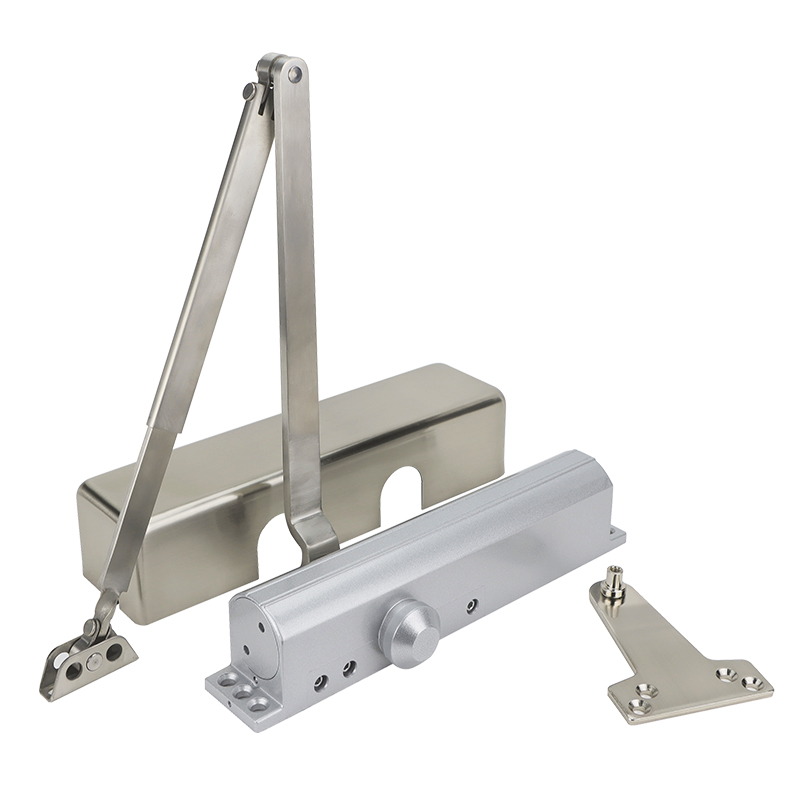
That word “request” is the part buyers miss. Parallel mounting is often an option rather than the default build, so if the PO does not state it, the order can arrive as a standard-arm unit and the installer cannot complete the fit.
When Should Commercial Buyers Specify a Parallel Arm Door Closer?
Is something already occupying the space above the door?
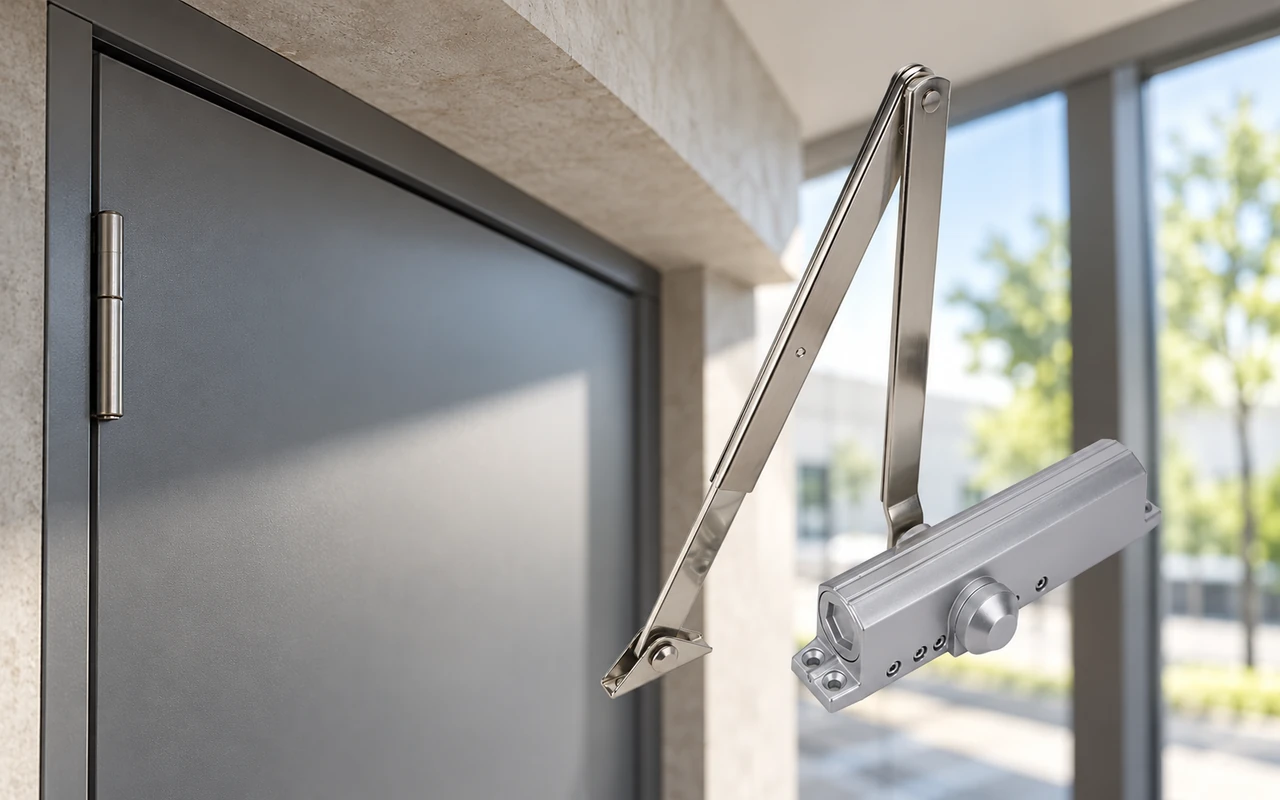
This is the main trigger. When an exit sign, conduit, duct, transom bar or low ceiling sits directly above the frame, a top jamb body has nowhere to mount. Moving the body down onto the door leaf keeps the space above the doorway clear, which is why parallel arm mounting appears so often on retail and corridor entrances. The storefront door closer guide works through the same constraint.
Is the frame too narrow or too weak for a header-mounted body?
Aluminum storefront framing is often thin, commonly around 1-3/4 inches on standard profiles. A closer housing that overhangs a shallow header loads a narrow profile and can lead to twisting, unstable latching and callbacks. Putting the body on the door leaf removes that pressure point. The types of aluminium door closers article maps mounting choices by door type.
When is parallel arm the wrong choice?
- Open headroom, deep frame. Top jamb or standard mounting is usually cheaper and simpler to install.
- Very heavy or wide leaves. Higher force needs a stable anchor point. Check the published weight and width range for the parallel configuration, the way the OB03 heavy-duty cast iron closer documents limits per sub-model.
- Thin or weak door rails. The body now hangs on the door leaf, so the top rail needs enough material to carry it.
- The OB03 Series is designed for various door types, including wooden and metal doors. Yes, the OUBAO OB03 Series features a non-handed design.
How Does Parallel Arm Compare With a Top Jamb Door Closer?
| Parallel arm | Top jamb | Standard arm | |
|---|---|---|---|
| Body position | Door leaf | Frame header | Pull side of door |
| Best suited to | Low headroom, obstructions, narrow frames | Open headroom, maximum leverage | Interior doors, general use |
| Typical extra hardware | P.A. bracket, sometimes a drop plate | Mounting plate for the header | Arm shoe and bracket set |
| Main risk to check | Top rail strength and thickness | Header depth and flatness | Exposure and tampering |
Does mounting change the power size you can use?
Yes, and it is easy to overlook. Mounting changes the arm geometry, which changes the closing force the same body can deliver, so a series may publish a wider power range for standard mounting and a narrower one for parallel mounting. On the 9016, the published range is power 1-6 across a 15-150 kg leaf and widths up to 1,400 mm, but confirm the figure for the position you are specifying. The 9016 is also published as non-handed, which reduces stock keeping for distributors who need one part number for both handings.
What Should You Confirm Before You Order?
- Mounting style stated on the PO, not just implied by the series name.
- Whether the P.A. bracket is included or supplied on request for that sub-model.
- Whether a drop plate is needed for a thin top rail or low ceiling.
- Leaf weight, width and top rail condition matched to the published parallel-arm figures.
- Certificates for the exact model and intended market, not the series as a whole.
- Finish, arm function (hold-open, back check, delay action) and packaging per variant.
- Quantity, MOQ and lead time confirmed in writing.
The model datasheet and the installation instructions for the exact unit settle most of this. Read certificates at model level too, because a series mark does not automatically cover every configuration or destination market. For grade evidence on heavy entrances, see the ANSI/BHMA Grade 1 vs Grade 2 guide.
Factory capability belongs in the same comparison. OUBAO produces more than six million door closers a year, holds CE, UKCA, UL, ANSI/BHMA Grade 1 and Warringtonfire Certifire certification in-house, and runs endurance testing in its own accredited laboratory. Private-label programs start from 300 sets with a published 30-day standard lead time. Our OEM and ODM team works from a door schedule and a mounting requirement, which is a faster conversation than starting from a catalogue page.
FAQ
Is a parallel arm door closer stronger than a top jamb closer?
Not inherently. Closing force comes from the spring and power size, not the mounting position. What changes is leverage and geometry, so the usable range on a given body can be narrower in parallel configuration.
Can one closer body be mounted in all three positions?
Often, yes. But that is a series-level statement, so check the specific sub-model and whether the parallel configuration needs a separate bracket or drop plate.
Why do installers ask for a drop plate?
When headroom is tight or the top rail is thin, there may not be enough flat surface for standard brackets. A drop plate gives the arm a solid anchor, and it is a small line item that keeps a site visit from stalling.
Parallel Arm Mounting Is a Headroom Decision, Not a Default
Specify a parallel arm door closer when the space above the door is occupied or the frame is too narrow for a header-mounted body, then check the top rail, the power size for that position and the bracket list before the order goes out. For other doors, top jamb or standard mounting usually costs less and installs faster.
Send the door schedule with leaf weight, width, frame type and mounting notes, and OUBAO will confirm the suitable configuration, the arm and bracket list, and a quotation for the model you need.