


Quick Answer
A magnetic lock can secure an access-control gate, but choosing one requires looking beyond holding force. Check the gate type, mounting position, alignment, power requirements, and weather exposure. For fully exposed gates, choose a lock specifically rated for the environmental conditions rather than assuming any high-strength maglock can handle outdoor use.
How Do Magnetic Locks Work on Gates?
A gate magnetic lock relies on an electromagnet and an armature plate. When power reaches the magnet, it attracts the armature and holds the gate closed. Cut the power, and the magnetic force disappears so the gate can open.
This makes a typical maglock fail-safe. If power is lost, the lock releases rather than remaining secured.
The concept is simple, but gates create challenges you may not encounter with a rigid indoor door frame. They can sag at the hinges, move in strong winds, and gradually shift out of alignment. Outdoor installations may also expose the lock and wiring to rain, dust, temperature changes, and corrosion.
For these reasons, choosing a magnetic lock for a gate starts with the installation environment, not simply the highest holding-force number you can find.
What Holding Force Do You Need for a Gate?
Holding force tells you how much separating force a properly installed lock is rated to resist. Higher-security applications may call for stronger magnetic gate locks, but there isn’t one holding-force rating that works for every gate.
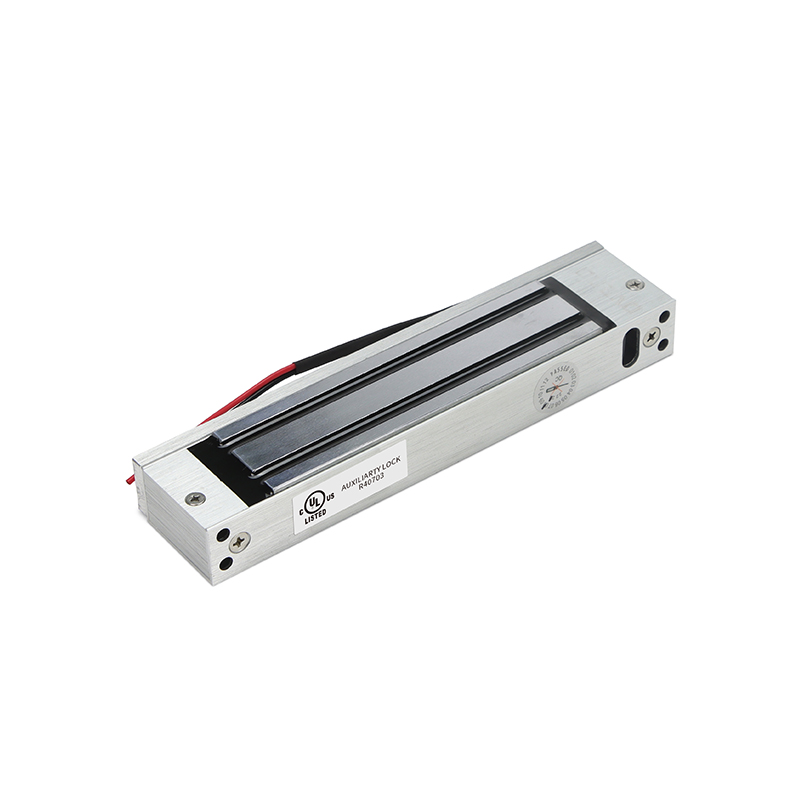
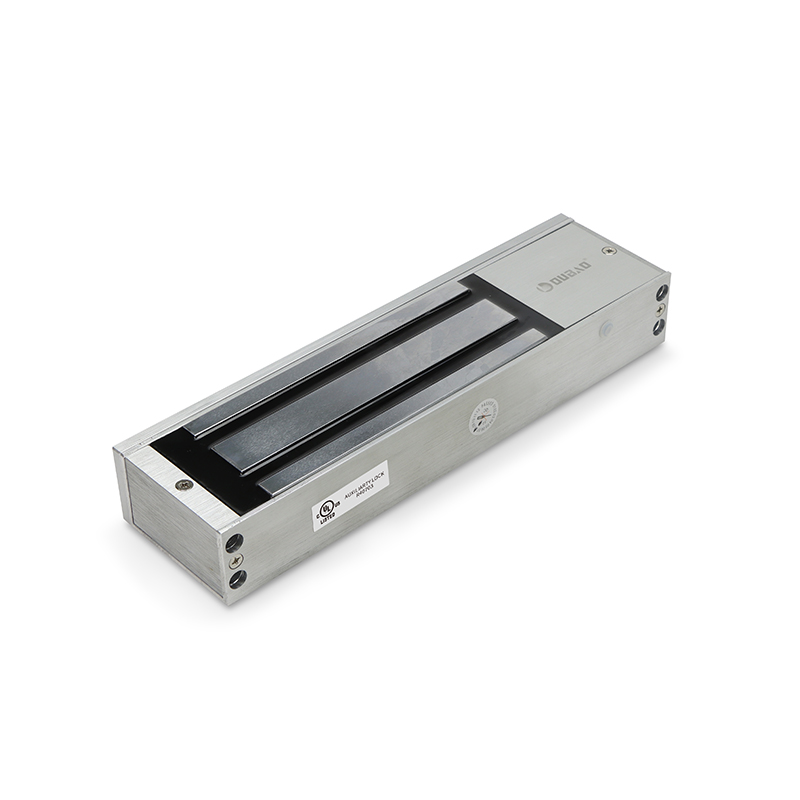
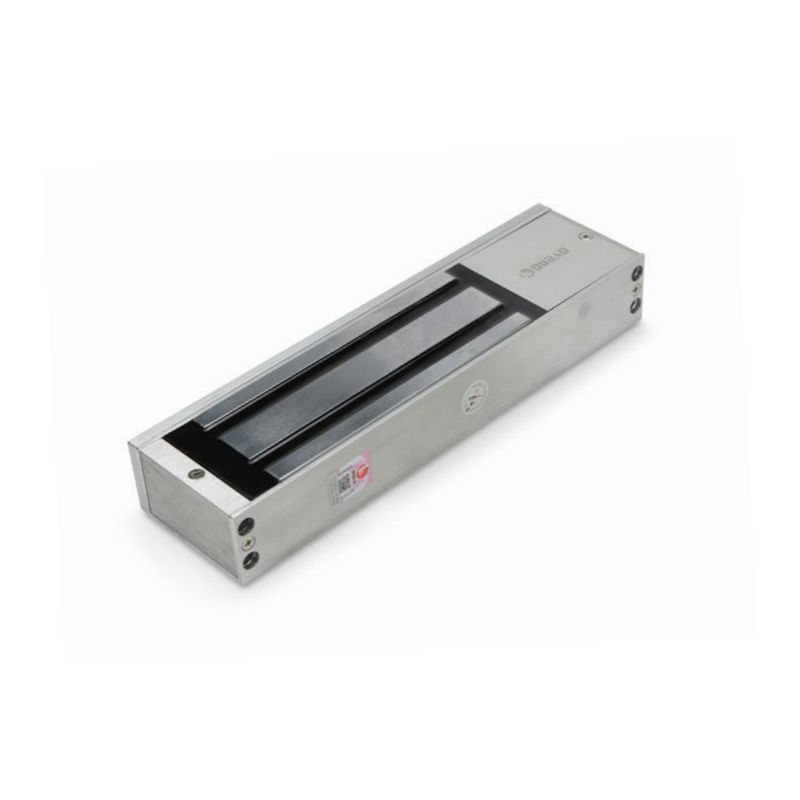
OUBAO’s heavier magnetic locks provide several reference points. The OB500 Series provides 500 kg (1,200 lbs) of holding force, while the OB700 increases that to 700 kg (1,500 lbs). The OB750 is the highest-rated of these three at 750 kg (1,600 lbs).
The OB750 operates on either 12VDC or 24VDC and is described by OUBAO for demanding, high-security applications. Like the OB500 and OB700, it is fail-safe.
However, a 1,600-lb rating doesn’t automatically make the OB750 suitable for an exposed outdoor gate. OUBAO’s published specifications don’t give the model an IP rating or explicitly describe it as weatherproof. Its environmental suitability therefore needs to be checked separately.
You can compare these and other options in OUBAO’s magnetic lock range.
What Should You Check for an Outdoor Gate?
First, look at how exposed the installation will be. A maglock tucked under a covered entrance faces different conditions from one mounted on an open perimeter gate.
For a fully exposed installation, look for a model the manufacturer specifically rates or specifies for outdoor use. Don’t treat an aluminum housing alone as proof that the electronics can withstand rain. Check the model’s operating temperature range as well, particularly for installations exposed to very hot or cold weather.
Corrosion matters as well. Water, dirt, road salt, and humid air can affect exposed hardware over time. OUBAO uses high-strength aluminum-alloy panels with an oxidized and brushed finish on models such as the OB500, OB700, and OB750.
OUBAO’s quality documentation also describes salt-spray corrosion testing at the manufacturing level. However, this doesn’t establish a particular IP or weatherproof rating for those individual models.
Does a Swinging Gate Need a Different Setup From a Sliding Gate?
Yes. The way your gate opens affects how the magnet and armature need to interact.
On a swinging gate, a direct-pull maglock can be positioned so the armature comes face-to-face with the magnet as the gate closes. Both surfaces need to meet evenly for the lock to develop its intended holding force.
A sliding gate presents a different problem because the gate moves laterally. Don’t assume a standard direct-pull lock can simply be turned sideways and installed in the sliding path. Depending on the design, the installation may require a shear-aligning magnetic lock or a mounting arrangement designed specifically for that movement.
Always check the manufacturer’s approved mounting configuration before ordering the lock.
Why Does Alignment Matter So Much?
A maglock depends on even contact between the magnet and armature plate. If the plate is skewed or reaches only part of the magnet face, you shouldn’t expect the lock to provide its rated holding force.
This is especially important on gates. Hinges can wear, gate leaves can sag, and repeated movement or wind can gradually affect alignment.
Install the armature according to the manufacturer’s instructions rather than fixing it in a way that the product doesn’t permit. Once everything is mounted, cycle the gate several times and check that the two surfaces meet correctly each time.
Alignment should be checked again during routine maintenance.
How Should You Install a Magnetic Gate Lock?
Begin by finding rigid mounting points for both parts of the lock. The magnet typically attaches to a fixed structure, while the armature attaches to the moving gate.
The exact gate lock magnetic mounting arrangement depends on the gate profile and direction of movement. Some installations use L or Z brackets, while others may require purpose-built brackets or clamps.
Don’t assume the mounting hardware used on a conventional door will suit your gate. OUBAO’s published information for the OB500, OB700, and OB750 doesn’t identify dedicated gate-mounting brackets for these models, so confirm the mounting requirements before specifying one for a project.
Once the hardware is in place, verify the alignment before completing the electrical installation.
How Should You Wire a Magnetic Lock on an Outdoor Gate?
In a typical access-control setup, the DC power supply feeds the magnetic lock through an access-control relay. Next, connect the exit control based on the access-control system and applicable egress requirements. Follow the wiring diagrams supplied with the lock and controller to get the terminal positions right and ensure everything is set up correctly.
Keep in mind that you have to protect the cable between the lock and the power source when it comes to an outdoor gate. This can be done with conduit, connections, enclosures, and wiring methods suitable for the environment. You’ll also need the correct wire size for the electrical load and distance on longer cable runs. After connecting everything together, measure the voltage at the lock while it’s energized to make sure excessive voltage drop isn’t preventing it from receiving the required voltage.
How Do You Maintain a Gate Magnetic Lock?
Some operators wait until the gate stops locking properly to inspect the system. But you’ll want to look for loosened mounting hardware and gate sag. These two can prevent the armature and the magnet from meeting evenly. It’s good to clean both contact surfaces whenever debris or dirt starts to build up.
You’ll also want to perform an electrical check on outdoor installations. Look for signs of moisture or damage in the enclosures, exposed connections, and conduit. If the holding force seems weaker than before, measure the voltage at the lock before assuming the magnet has failed. Sometimes, a voltage drop or wiring issue can be the actual cause.
For its own magnetic locks, OUBAO says every unit goes through functional testing and a zero-residual check during quality control to verify proper fail-safe release.
Which OUBAO Magnetic Lock Should You Choose for a Gate Project?
The OB500, OB700, and OB750 provide progressively higher holding-force options at 500 kg, 700 kg, and 750 kg respectively. Of these three, the OB750 has the highest published holding force and is positioned for demanding, high-security applications.
But don’t choose based on holding force alone. Consider the gate’s movement, mounting arrangement, electrical requirements, alignment, and exposure to the elements. If the installation is fully exposed outdoors, confirm the required weather protection and mounting hardware with OUBAO before ordering.
If you’re sourcing locks for a project in a specific region, it can also help to see which suppliers serve that market and what outdoor options they offer. Compare magnetic gate lock manufacturers serving Europe or explore magnetic lock manufacturers catering to the Middle East market before narrowing down your options.