

Quick Answer
A sliding door magnetic lock can work when the mounting arrangement allows the magnet and armature to meet correctly once the door closes. Because the door moves sideways, you also need to account for the track and available clearance. Choose the lock based on the door construction, available mounting space, and required holding force.
Can You Use a Magnetic Lock on a Sliding Door?
Yes, but the sideways movement affects where you can position the magnet and armature.
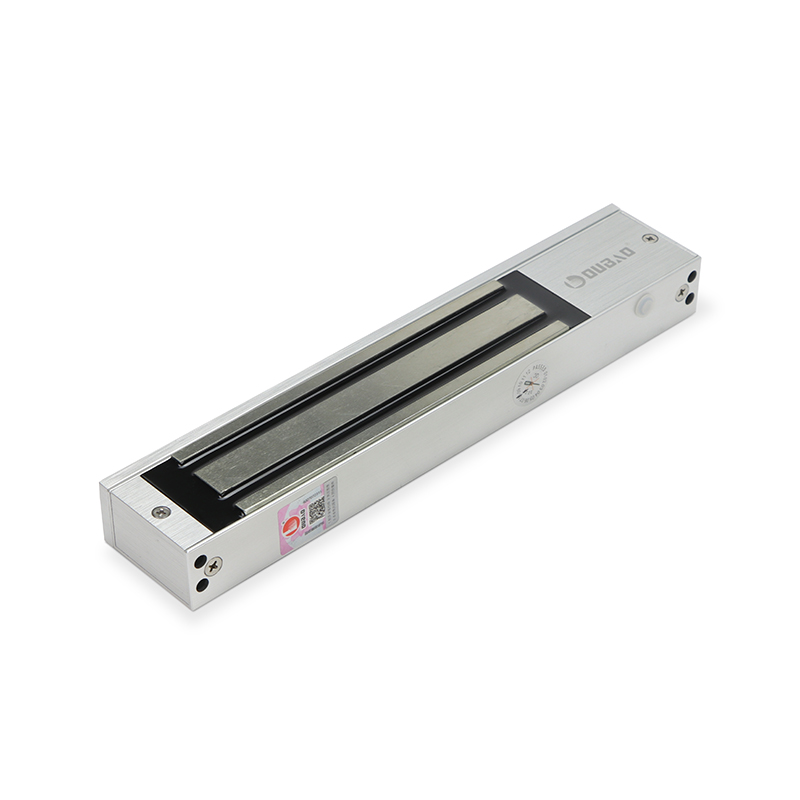
A conventional direct-pull maglock develops its holding force when the armature meets the magnet face-to-face. If the door simply slides across the face of the magnet, the lock isn’t being used in the direction it was designed to resist. The mounting arrangement should instead bring the two surfaces together correctly at the fully closed position.
A shear magnetic lock works differently because it adds mechanical engagement to the electromagnetic holding force. This can suit openings where the movement or available mounting position makes a conventional direct-pull arrangement difficult.
If you’re unfamiliar with the operating principle, this explanation of the magnetic door lock function reveals what happens when the magnet is powered and released.
Which Magnetic Lock Works Best for a Sliding Door?
The available mounting space can narrow down your options quickly. The magnet and armature need somewhere to sit without interfering with the moving panel.
OUBAO’s OB180 Series provides 180 kg (400 lbs) of holding force, while the OB280 Series provides 280 kg (600 lbs). Both are specified for wooden, glass, and metal doors, with hanging and mortise-installation variants available across the series.
The OB280 gives you a higher holding-force option when 400 lbs isn’t enough for the project. Whichever model you use, the mounting structure needs to support the hardware and keep the magnet and armature correctly positioned.
You can view these models alongside other options in OUBAO’s magnetic lock offerings.
Can You Recess a Magnetic Lock Into a Sliding Door?
Mortise installation can keep more of the hardware out of sight, but you need enough room to recess the lock without obstructing the sliding mechanism.
OUBAO’s OB280 Series includes the OB280F mortise variant. Any recessed installation needs a suitable structural location that doesn’t interfere with the door’s movement or hardware. An active sliding track shouldn’t be treated as empty space for the lock body simply because a model supports mortise installation.
Think about service access too. The lock may eventually need inspection or adjustment, so it shouldn’t be recessed somewhere that becomes difficult to reach once the surrounding structure is finished.
- Holding Force280kg (600lbs)
- TypeStandard-duty magnetic lock
- ApplicationEveryday commercial applications
What About a Sliding Glass Door Magnetic Lock?
A sliding glass door magnetic lock may require additional mounting hardware. That’s because the glass panel may not offer the same fixing points as a metal or framed wooden door.
Glass-specific clamps or brackets are what frameless glass often relies on to support the locking hardware. For a tempered glass panel, it’s best to avoid drilling or modification in the field. Instead, use hardware specified for the existing glass thickness and construction.
A bracket that works on a swinging glass door isn’t automatically suitable for a panel traveling sideways past a frame or another piece of glass. Make sure the bracket and armature remain clear throughout the door’s full travel.
Our guide to choosing a magnetic lock for glass doors covers glass-specific mounting considerations in more detail.
When Might an Electric Bolt Make More Sense?
Sometimes there isn’t a practical way to arrange the face-to-face contact required by a conventional maglock. In that situation, an electric bolt may fit the opening more easily.
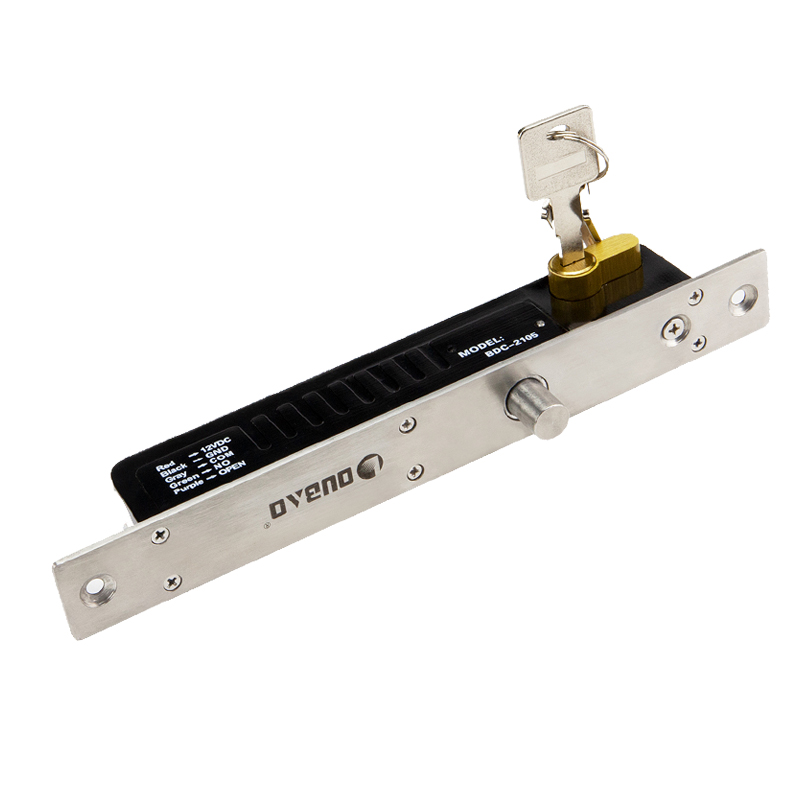
OUBAO’s OB-12 supports glass, wooden, and metal doors and operates on 12VDC or 24VDC. It is fail-safe, so the bolt unlocks when power is removed. The OB-13 supports the same door materials and voltage options. Unlike the OB-12, it’s fail-secure, so the access side remains locked during a power outage.
Whichever lock you use, its locking components need to line up each time the door closes. The required power-loss behavior also needs to suit the opening.
- TypeFail-secure electric bolt lock
- ApplicationAccess control systems
- SecurityRemains locked during power outages
Why Is Alignment Different on a Sliding Door?
A sliding panel needs to return to the same position each time it closes. Wear or changes in the sliding mechanism can gradually affect that position.
If that changes the position of the armature, it may no longer meet the magnet evenly, reducing the available holding force. The door should reach a consistent closed position without forcing the locking hardware to compensate for problems elsewhere in the sliding mechanism.
The mounting structure needs to stay rigid as well. Any movement can throw an otherwise correctly positioned lock out of alignment.
What Should You Check Before Installation?
Open and close the door fully to ensure the locking hardware doesn’t hinder its movement. Next, check that the armature and magnet line up properly as the door reaches the closed position.
It’s also important to match the power supply to the current and voltage requirements of the lock. With longer cable runs sometimes causing voltage drops, you want to ensure the lock still receives the necessary voltage during operation.
Finally, check what needs to happen if power is lost. Conventional magnetic locks are fail-safe, but that alone doesn’t mean the complete installation meets the applicable egress, fire-safety, accessibility, or electrical requirements.