

These two terminologies often creates confusion during the project specification phase. Most buyers use “door closer” as a generic catch-all for any device that pulls a door shut. However, a mechanical distinction exists between a simple spring force and a damping system.
A door closer is the general category; a hydraulic door closer is the specific type built for modern buildings. The hardware you choose determines whether a door works smoothly for years or breaks down quickly. Knowing how these devices work is the key to keeping them reliable in busy spaces.
What is a door closer?
A door closer is a mechanical device that automatically pulls or pushes a door shut after it has been opened. The category includes several types—spring-loaded, pneumatic, and hydraulic—each using a different mechanism to control the closing motion. All versions serve the same basic purpose: returning a door to its closed position without any manual effort from the user.
What is a hydraulic door closer?
A hydraulic door closer uses a specific type of hydraulic oil to control the operation and the rate at which a door opens and closes. This fluid flows through internal chambers within the mechanism to create resistance, effectively slowing the door’s movement to prevent slamming. This resistance remains fully adjustable to meet the specific requirements of the door weight and environment.
At OUBAO, we take this further by utilizing zero-leakage hydraulic technology paired with 0.01mm precision pistons. This extreme level of machining ensures that the oil moves through the valves with absolute consistency. Because we manage every production step in-house—from die-casting to painting—we ensure that the internal hydraulic circuit remains free of contaminants that could clog the valves.
- Closing ForceSpring Strength EN 3-5
- Max Door Width1250mm
- Max Door Weight100kg
- Body Dimensions237 mm (L) * 81 mm (W) * 37 mm (H)
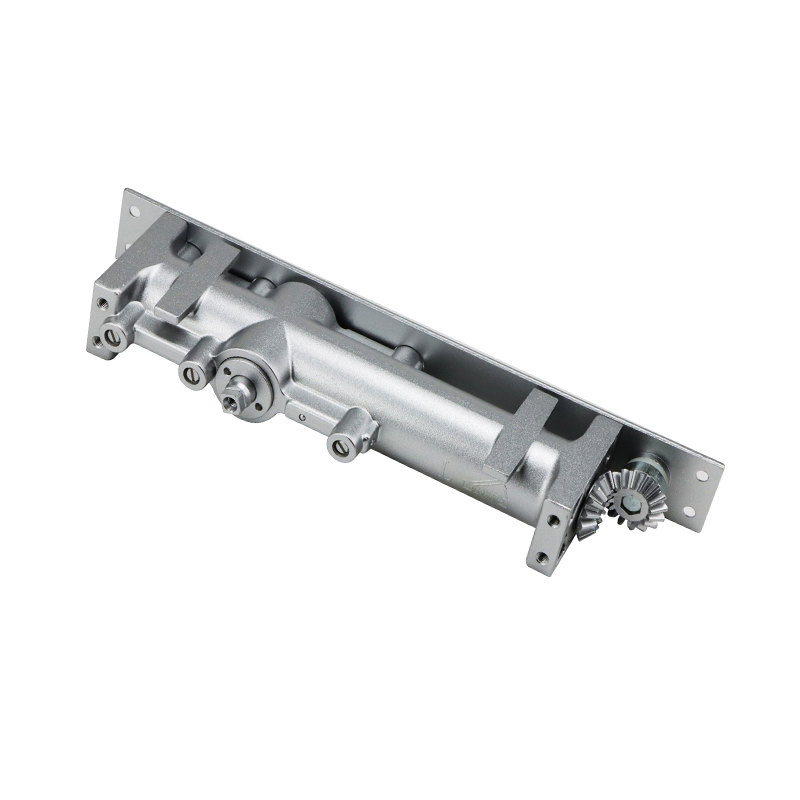
Key features of a hydraulic door closer
Smoother Operation
The hydraulic oil ensures that the operation remains smoother and more consistent than any pneumatic alternative. You achieve maximum control over the door’s arc, which is essential for heavy-traffic public buildings. This precision prevents the “slam-and-bounce” effect that often occurs when air-based systems struggle with high wind loads or HVAC stack pressure.
Enhanced Durability
Hydraulic systems provide superior durability because they possess better weather resistance. Our systems maintain stable closing performance in extreme environments as cold as -40°C. Because oil is incompressible, it does not lose its damping properties in the summer or thicken excessively in the winter, provided the fluid chemistry is high-grade.
Professional Maintenance
Oil requires specialized handling and precise seals. Over time, oil seals can become worn, which may result in leaks. However, specifying a heavy-duty hydraulic door closer designed for high-cycle durability minimizes this risk. We back our hardware with a 5-year quality warranty because our 0.01mm piston tolerances significantly reduce friction on the seals.
Where would you use a hydraulic door closer?
A Hydraulic Door Closer Commercial grade unit is the correct choice for both residential and commercial buildings because it handles a wider range of door weights. Whether the project involves a light office door or a massive lead-lined hospital door, the hydraulic circuit provides the necessary power.
Because of their excellent weather resistance, these units are mandatory for exterior doors. They also integrate seamlessly into high-security zones where a Hydraulic Door Closer lock must engage reliably every time the door shuts. For luxury hotels or executive offices where aesthetics matter, we often specify a Hydraulic Door Closer hinge that hides the damping technology within the hardware itself.
Key Features of Door Closers
Fast Closing Speed
Door closers respond quickly due to the immediate release of compressed air, making them effective at shutting doors without delay. However, this speed is difficult to fine-tune. Depending on air pressure levels and ambient temperature, the door may fail to latch fully or close with enough force to cause slamming — both of which create safety and wear concerns over time.
Temperature Sensitivity
Compressed air expands in heat and contracts in cold, which directly affects the closing force door closers deliver. In environments with seasonal or daily temperature swings, this means the damping performance shifts without any change to the settings. Facility staff may need to readjust the unit repeatedly throughout the year to maintain safe, consistent operation.
Minimal Maintenance Requirements
Door closers have fewer internal components than hydraulic alternatives, which reduces the likelihood of mechanical failure in light-use settings. There are no fluid seals to monitor and no risk of oil leaks. Routine checks are limited to verifying air pressure, making these units a low-effort option for residential applications such as screen doors and light interior doors.
Where Are Door Closers Used?
Door closers are best suited for residential settings and light-duty interior doors where fast, unassisted closing is the primary requirement. They are commonly installed on screen doors and storm doors to minimize air exchange and improve energy efficiency.
However, their limited force output and sensitivity to temperature make them unsuitable for heavy commercial doors, exterior high-traffic entrances, or any application where consistent latching is a safety or compliance requirement.
Choosing The Right Door Closer For Your Facility
| Feature | Hydraulic Door Closer | Door Closer |
| Damping Medium | Hydraulic Oil | Compressed Air |
| Piston Precision | 0.01mm | 0.05mm – 0.10mm |
| Control | Smooth and consistent | Fast but inconsistent |
| Weather Resistance | Stable to -40°C | Affected by temperature |
| Best For | All door types | Light doors only |
For industrial and fire-rated projects, hydraulic technology is the standard choice. Installation begins with selecting the right mounting type — regular, top jamb, or parallel arm — based on the door’s layout and usage.
After installation, closing speed is adjusted using the sweep and latch valves. For accessibility needs, a hold-open function keeps the door at 90 degrees for easier passage. With 150+ patents and a 106,000 ㎡ manufacturing facility, OUBAO ensures consistent performance across millions of operating cycles.
Frequently Asked Questions
What is the minimum order quantity (MOQ) for certified closers?
The MOQ typically ranges from 300 to 1,000 units depending on the specific model and customization requirements. This scale allows for factory-direct pricing while maintaining 6S quality management standards.
How long does it take to receive a bulk order for a global project?
The standard lead time is 35 days from order confirmation. This timeline is possible because of vertically integrated manufacturing bases that manage the entire production cycle in-house.
Are samples provided for project evaluation before a bulk purchase?
Yes, manufacturers often provide free samples for evaluation. This allows project engineers to assess build quality, hydraulic stability, and finish before placing a contract for an entire facility.