

Quick Answer:
A hidden door magnetic lock is electromagnetic locking hardware installed so it doesn’t spoil the appearance of a concealed door. Depending on the opening, this could mean a compact cabinet lock, a recessed conventional maglock, or a shear magnetic lock. Choose based on the door type, holding force, available installation space, alignment, and power-loss behavior.
What Is a Hidden Magnetic Door Lock?
Terms such as “hidden magnetic door lock” and “secret magnetic door lock” describe the way the lock is used instead of a specific type of electromagnetic lock.
A small maglock can fit discreetly inside the surrounding structure of a display case or cabinet. However, a conventional maglock made for mortise installation (where the lock is recessed and not prominently surface-mounted) may be used for a full-size concealed door.
Certain concealed openings rely on a shear magnetic lock. Before choosing between these designs, it helps to understand how magnetic door locking works in an access control system. Conventional maglocks use electromagnetic force to hold the armature against the magnet, whereas shear locks add mechanical engagement to help resist movement.
As such, it makes sense to start with the opening rather than searching for any lock labeled “hidden.”
Which Magnetic Lock Works Best for a Bookcase or Concealed Door?
The best choice depends largely on whether you’re locking a full-size door that people can walk through or a piece of furniture.
For cabinets and display cases, compact dimensions can be just as important as holding force because there may be little room to hide the hardware. A full-size concealed door calls for a different approach. Here, you’ll need to consider the required holding force, door material, available mounting space, and whether you want the lock recessed into the frame.
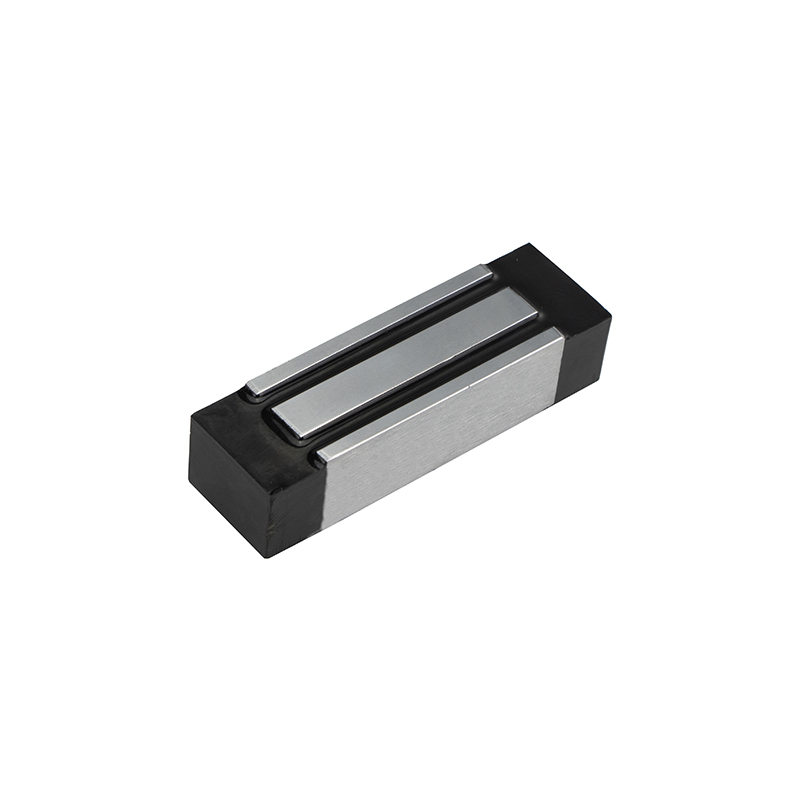
OUBAO’s range shows how those requirements can lead to different choices. The OB50 Series is designed for showcases, file cabinets, and display cabinet doors, with compact models ranging from 85 to 115 mm in length and holding forces from 40 to 80 kg.
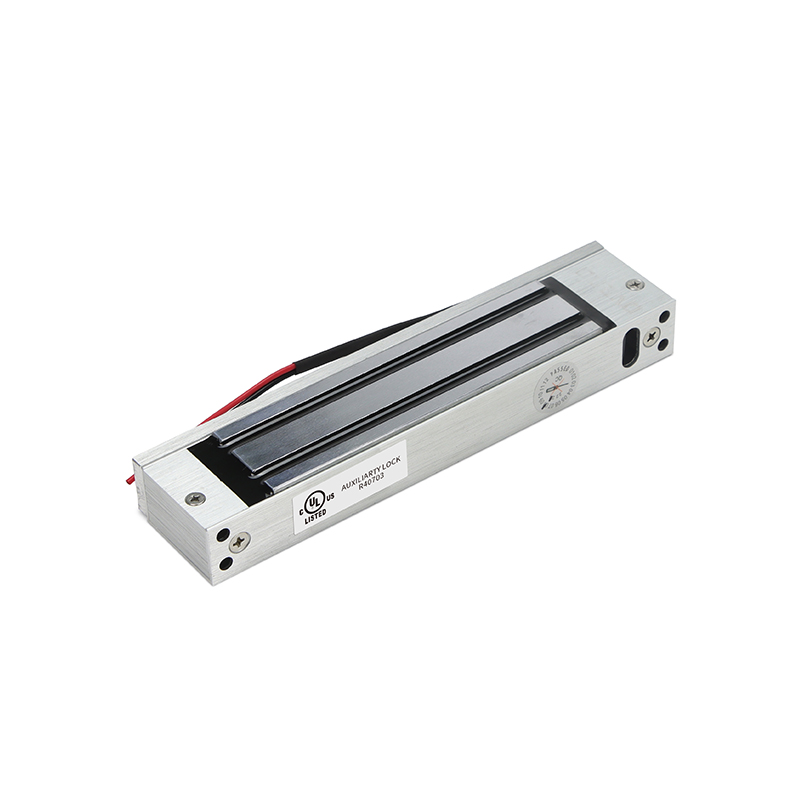
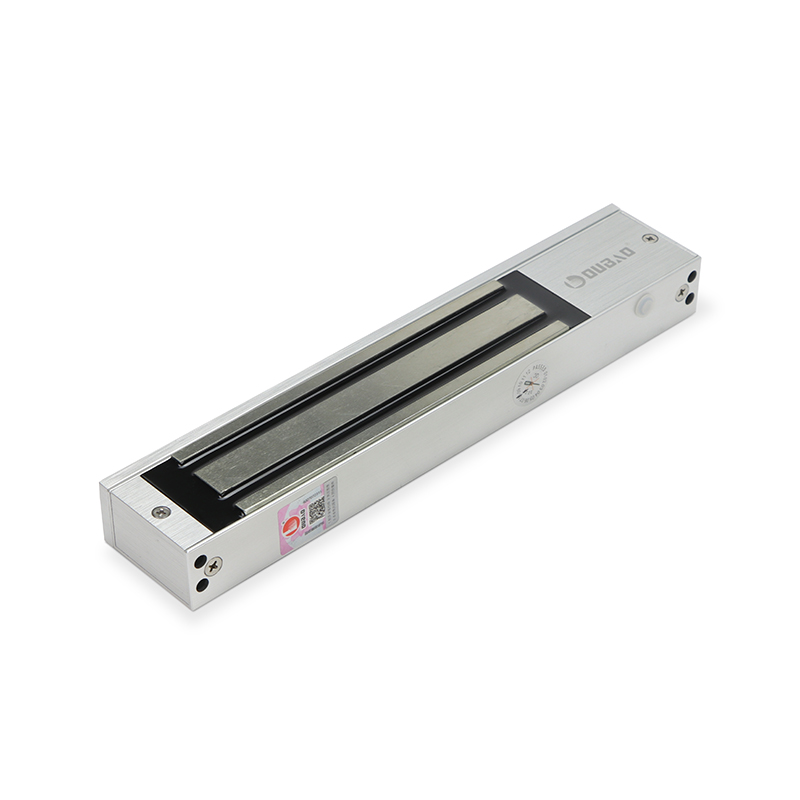
For a full-size concealed door, the OB180 Series provides 180 kg (400 lbs) of holding force, includes mortise-installation variants, and is specified for wooden, glass, and metal doors. If the project requires greater holding force, the OB280 Series increases that to 280 kg (600 lbs), with the OB280F offering mortise installation.
The important part is that “hidden” isn’t the selection criterion by itself. Match the lock to what you’re actually securing and how you need to install it.
Does a Bookcase Door Need a Stronger Magnetic Lock?
Not always. You don’t have to choose a holding force rating by comparing it directly with the weight of the bookcase door.
The holding-force rating of a maglock describes its resistance to separating force under the conditions specified for that particular lock. Meanwhile, the pivot system or hinges primarily carry the door weight.
Consider how the door opens, the required level of security, the rigidity of the surrounding structure, and where you can mount the lock. It’s also important to ensure the armature and magnet maintain proper contact.
This is why simply choosing the highest holding-force number isn’t always the best approach. The lock still has to suit the physical opening and be installed correctly.
Where Should You Put the Lock on a Pivoting Bookcase Door?
There isn’t one mounting position that works for every pivoting bookcase.
The location of the pivot determines the path that the door follows as it opens and closes. The direction of swing and the door thickness can also affect that path. If you place a lock without accounting for this movement, it can interfere with opening or fail to align with the armature when the door shuts.
Check the complete swing path first. Then identify a structurally sound mounting position where the lock and armature can meet as intended.
Bookcase doors deserve additional attention because their loading can change. Books and other contents can cause movement or sagging over time, so alignment should be checked periodically after installation.
Why Is Alignment Important on a Hidden Magnetic Lock?
Good contact is required between the armature and magnet face to develop the intended holding force for a conventional maglock. If these two surfaces don’t meet correctly, even a powerful lock can perform poorly. This can be critical for a hidden door, as the surrounding millwork can make it difficult to make adjustments once everything is finished.
To prevent this from happening, install the armature exactly as specified by the manufacturer. Several conventional maglock models use an armature arrangement that enables some movement to help the plate align with the magnet face.
Avoid recessing, tightening, or otherwise modifying that assembly in ways the manufacturer’s instructions don’t allow.
Should You Choose a Surface or Mortise Magnetic Lock?
A surface-mounted lock is generally easier to install and access later, but hiding the hardware may require incorporating it into the surrounding trim or millwork.
Mortise installation provides a cleaner option because the lock body can sit within the structure. The trade-off is that you need enough space and structural depth for the lock, wiring, and mounting hardware.
Servicing matters too. A beautifully concealed lock isn’t very practical if finished millwork has to be damaged whenever the hardware needs attention.
Before choosing a mortise model, check its dimensions, required clearances, approved mounting position, and how you’ll access it after installation.
What Happens to a Hidden Magnetic Door Lock During a Power Failure?
Conventional magnetic locks are generally fail-safe because electrical power creates the magnetic force that keeps them locked. Remove that power, and the lock releases.
OUBAO’s OB50, OB180, and OB280 magnetic locks are all specified as power-off-to-unlock models.
That behavior can be useful where release on power loss is required, but it may not suit every concealed space. If maintaining security during a power failure is important, consider the complete access-control design and whether another type of locking hardware is more appropriate.
How Can You Open a Secret Door Without Visible Lock Hardware?
The lock itself doesn’t determine how access has to be authorized.
Depending on the system, an electromagnetic lock can work with an access-control reader, keypad, switch, or another compatible control that releases the lock when access is granted. This gives designers options for keeping conventional lock hardware from dominating the appearance of the door.
Plan the controls alongside the lock rather than afterward. You need a practical way to enter, release the door from the other side where required, and access the system for maintenance.
What Should You Check Before Buying a Hidden Magnetic Door Lock?
When comparing secret door magnetic locks, start by deciding whether you’re securing a cabinet, display case, or full-size pedestrian door. That distinction helps determine which type of hardware you should be considering in the first place.
Then check the holding force, physical dimensions, surface or mortise installation method, voltage and current requirements, available mounting space, door movement, and required access controls. Consider how the wiring will reach the lock without interfering with the concealed design.
For full-size doors, also verify the hardware and complete locking arrangement against any building, fire, accessibility, and egress requirements that apply to the project. Requirements vary by application and jurisdiction, so don’t assume a solution suitable for a cabinet is automatically appropriate for an occupied space.
OUBAO manufactures magnetic locks for different door and installation requirements, including surface and mortise options with different holding-force ratings.