


Quick Answer
Cam action and rack and pinion are the two main hydraulic mechanisms inside a door closer. A cam action door closer uses a heart-shaped cam and roller, so the door opens with noticeably less effort and still latches firmly — a good fit for accessible, quiet and premium entrances. A rack and pinion door closer uses a pinion gear driving a toothed piston: simpler, cheaper, and available in wider power ranges. OUBAO builds both, so buyers can match the mechanism to the door schedule.
This guide compares cam action vs rack and pinion door closers on opening force, functions, cost and application.
How Does Each Mechanism Actually Work?
What is a cam action door closer?
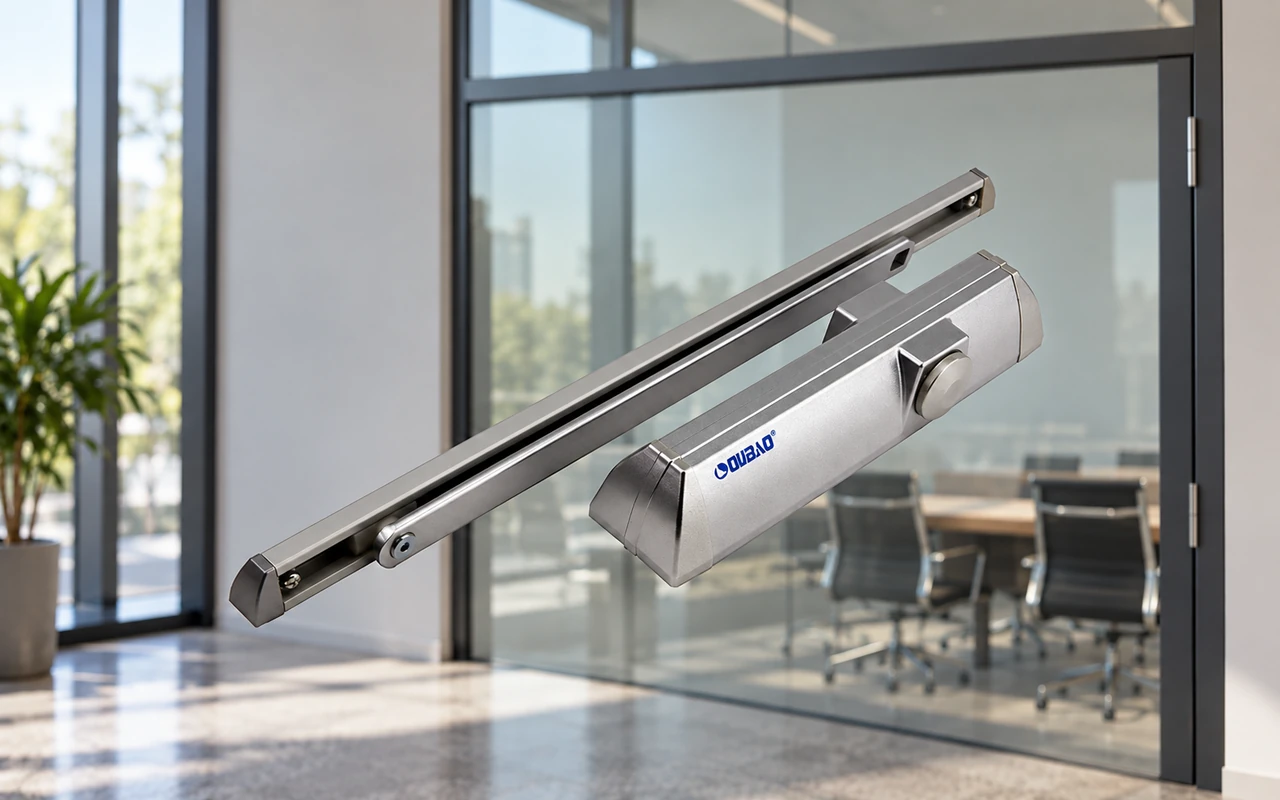
A cam action door closer replaces the gear drive with a heart-shaped cam and a roller. As the door swings, the roller travels along the cam profile, so the spring compresses gradually. The door needs less push to open, closes smoothly and still latches firmly.
Low opening effort is why specifiers use it on hospitals, schools, hotels and barrier-free routes — the basis of the OUBAO cam action door closer range.
What is a rack and pinion door closer?
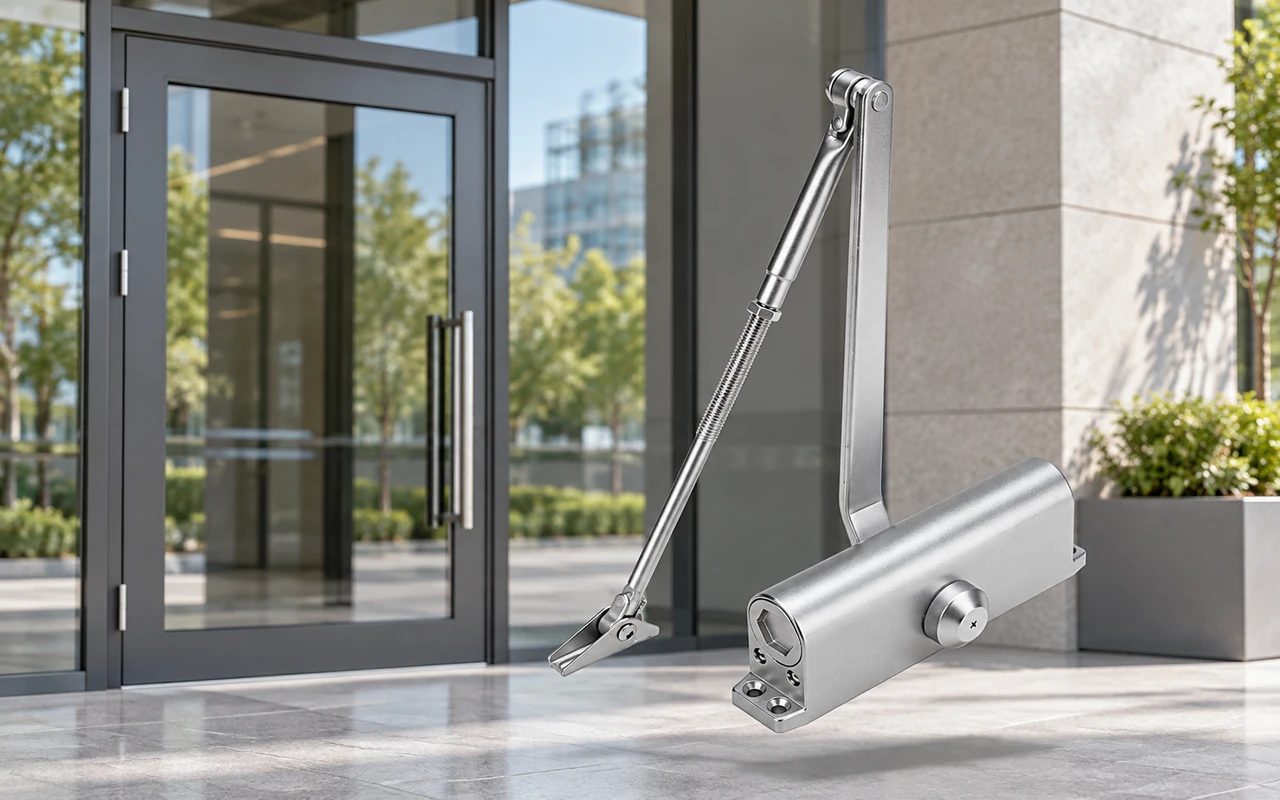
A rack and pinion door closer is the classic layout: a pinion gear on the spindle drives a toothed rack, and the piston pushes hydraulic oil through valves to control closing speed. Fewer precision parts in the drive keep unit cost down and servicing predictable. It also spans wide power bands — the OUBAO 7016 adjustable power door closer covers EN 1–6 across leaves from 15 kg to 150 kg.
Which one opens more easily?
Cam action. The cam profile lowers the force needed early in the swing, which is the part users notice. Rack and pinion can also be set light, but usually by stepping down a power size, which caps the leaf weight it carries. On an accessible route, cam action meets the opening-force target without losing closing force.
How Do They Compare Side by Side?
| What buyers compare | Cam action door closer | Rack and pinion door closer |
|---|---|---|
| How it drives the door | Heart-shaped cam and roller | Pinion gear driving a toothed rack |
| Opening effort | Lower | Higher, tuned by power size |
| Typical power range | Narrower, often EN 2–4 | Wider, often EN 1–6 or more |
| Common arm type | Slide arm / guide rail track | Scissor arm, or slide arm on some models |
| Extra functions | Fewer options | Back check, delay action, hold-open |
| Concealed versions | Yes | Limited |
| Unit cost | Higher | Lower |
| Best fit | Accessible, quiet and premium entrances | High-traffic, budget-sensitive and heavy-duty doors |
One row deserves a second look. Cam action slide-arm models usually offer adjustable closing and latching speed plus an optional hold-open arm, and little else. Rack and pinion bodies more often add back check, which cushions the door at the end of a hard push, and delayed action, which holds the door open briefly before closing. If your door schedule needs either function, check the exact model — the door closer collection lists published functions by series.
When Should You Choose a Cam Action Door Closer?
Is the entrance on an accessible route?
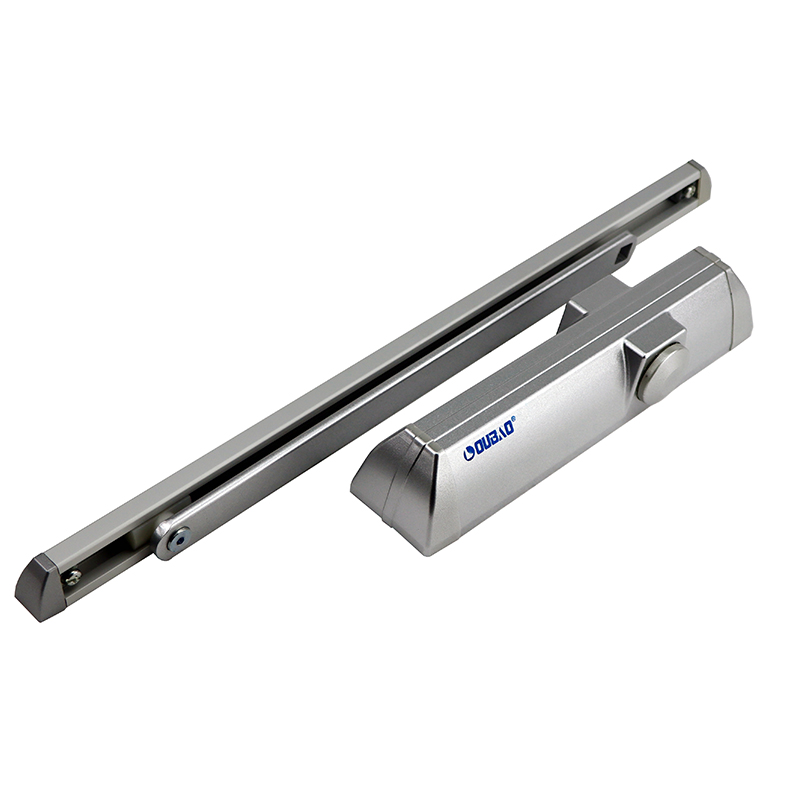
Cam action is the easier route to an opening-force limit, because you keep a firm latch without a heavy push. The T90/T30 cam door closer is published at 20–80 kg door weight, up to 1,100 mm width and power 2–4 — enough for most office, hotel and retail entrances. Both sub-models are non-handed, so one part number covers left- and right-hand doors.
- Yes, this series can be equipped with a hold-open arm to realize the hold-open function. This series is designed for various door types, including wooden and metal doors.
Do you need it hidden, or quiet?
Concealed install is one of the strongest cases for cam action. The T96 concealed cam door closer sits fully inside the leaf and frame, so nothing shows on the door face — the usual requirement on hotels, premium retail and high-end offices. Slide-arm units also run quietly, which matters in corridors and patient areas.
When is cam action a poor fit?
Very heavy or wide leaves. Cam action bodies are usually published in narrower power ranges, so a 150 kg entrance is a heavy-duty rack and pinion or cast iron job. Wind-exposed exterior doors also suit sturdier surface-mounted hardware.
When Is a Rack and Pinion Door Closer the Better Buy?
Is the project budget-led or volume-led?
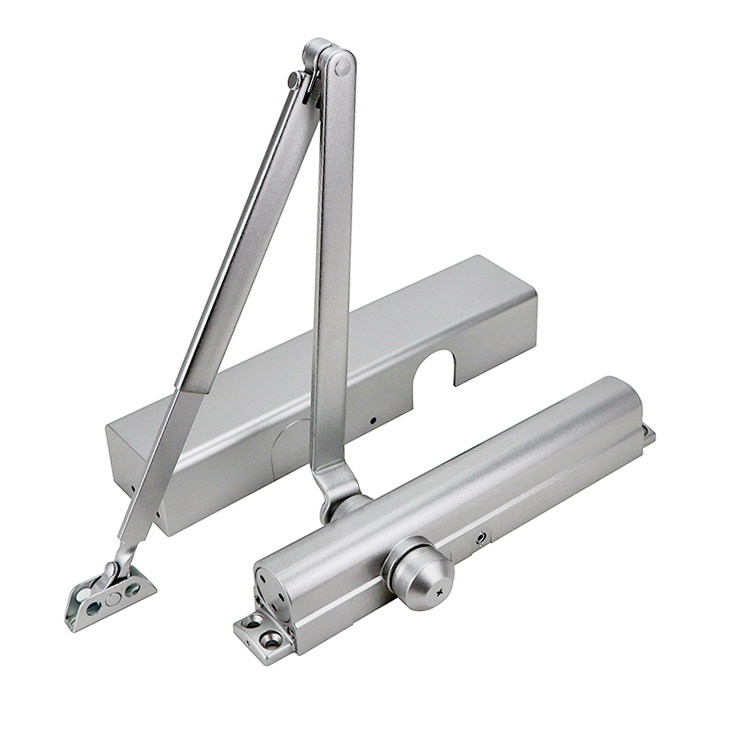
Rack and pinion wins on price, because the mechanism is simpler to produce. The 600 Series budget door closer runs from 15 kg to 120 kg door weight across six sub-models on one heavy-duty rack and pinion platform.
- This series is designed for various door types, including wooden and metal doors. Yes, this series features a non-handed design.
Do you need wide power coverage from a shallow stock list?
Yes — this is a real rack and pinion strength. One series can span EN 1 to EN 6 with an adjustable valve, so a distributor carries fewer bodies and still covers most local doors. Cam action covers a narrower band: fine for a focused line, awkward as a catalogue’s only closer.
Are you specifying aluminium storefront doors?
Both mechanisms appear on aluminium, but frame depth and mounting decide the fit. Narrow storefront profiles often point to a parallel-arm or slide-arm arrangement; the guide to door closer types for aluminium doors explains how those choices behave on glass-and-aluminium entrances.
Which One Costs Less Over the Life of the Door?
Up front, rack and pinion is cheaper, and the gap is widest at the entry level.
Over time, traffic decides it. High-cycle entrances wear the drive first, so a heavy-duty rack and pinion or cast iron closer is often cheaper to own on a busy door — it is built for that duty and easy to service. Cam action earns its premium where the door must stay easy to push and quiet, or where the closer has to disappear into the frame.
What Should You Confirm Before You Order?
- Leaf weight and width against the exact sub-model’s published range, not the series name.
- Power size, or adjustable range, checked against the actual leaf.
- Mounting style — standard, top jamb, parallel arm or slide arm.
- Functions needed: closing and latching speed only, or back check, delayed action and hold-open as well.
- Certificate scope for the exact model and destination market; a UL, CE, ANSI/BHMA Grade 1 or Warringtonfire Certifire mark on one sub-model does not automatically cover the series.
- Finish, arm and packaging per variant, plus quantity, MOQ, lead time and sample terms in writing.
Mechanism breadth matters here. OUBAO manufactures door closers and magnetic locks in China, with die casting, CNC machining, oil filling, assembly and finishing in-house across a 106,000 m² base, and OEM/ODM programs starting from an MOQ of 300 sets. A distributor can quote both mechanism types from one source, with consistent documentation and shared spare-parts support.
FAQ
Which door closer opens more easily?
Cam action, generally. The cam profile lowers the force needed early in the swing, so the door feels lighter even when closing force is unchanged.
Are cam action door closers more expensive?
Yes, usually. The cam and roller drive is more precise to manufacture, so cam action carries a premium while rack and pinion dominates the budget tiers.
Can a cam action door closer go on a fire door?
Yes, if the exact model carries the fire certification your project requires. OUBAO publishes the T90/T30 series as EN 1154 compliant with fire-protection certification, but confirm the document covers your specific model, leaf and tested door assembly in the destination market.
Which is better for high-traffic commercial doors?
Cycle life and serviceability decide it more than the mechanism. Heavy-duty rack and pinion and cast iron bodies are usual where a door cycles thousands of times a day; cam action is chosen where opening effort, noise or a hidden install matters more.
Cam Action or Rack and Pinion? Match the Mechanism to the Door
Choose a cam action door closer when the entrance must open easily, run quietly or stay visually clean. Choose a rack and pinion door closer when you need wide power coverage, lower unit cost or proven heavy-duty life. Neither is universally better — the door schedule, the functions you must deliver and your market decide.
Send the door schedule — leaf weight, width, frame type, mounting notes, required functions and destination market — and OUBAO will confirm which mechanism suits each opening, with the model, model-level certification documents and a quotation.