

Quick Answer
The arm links the closer body to the door or frame, and it decides how the door feels and where the unit can mount. A slide arm door closer runs a roller in a track, so the door opens more easily and quietly. A scissor arm uses two jointed sections, fits more mounting positions and usually costs less. Both appear on cam action and rack and pinion door closers, so choose by door, headroom and installation method, not by which arm sounds more advanced.
What Is the Difference Between a Slide Arm and a Scissor Arm Door Closer?
Arm type is a mounting decision, not a quality grade. Buyers often treat the arm as a small accessory, then find it decides whether the closer fits the door at all.
What is a slide arm door closer?
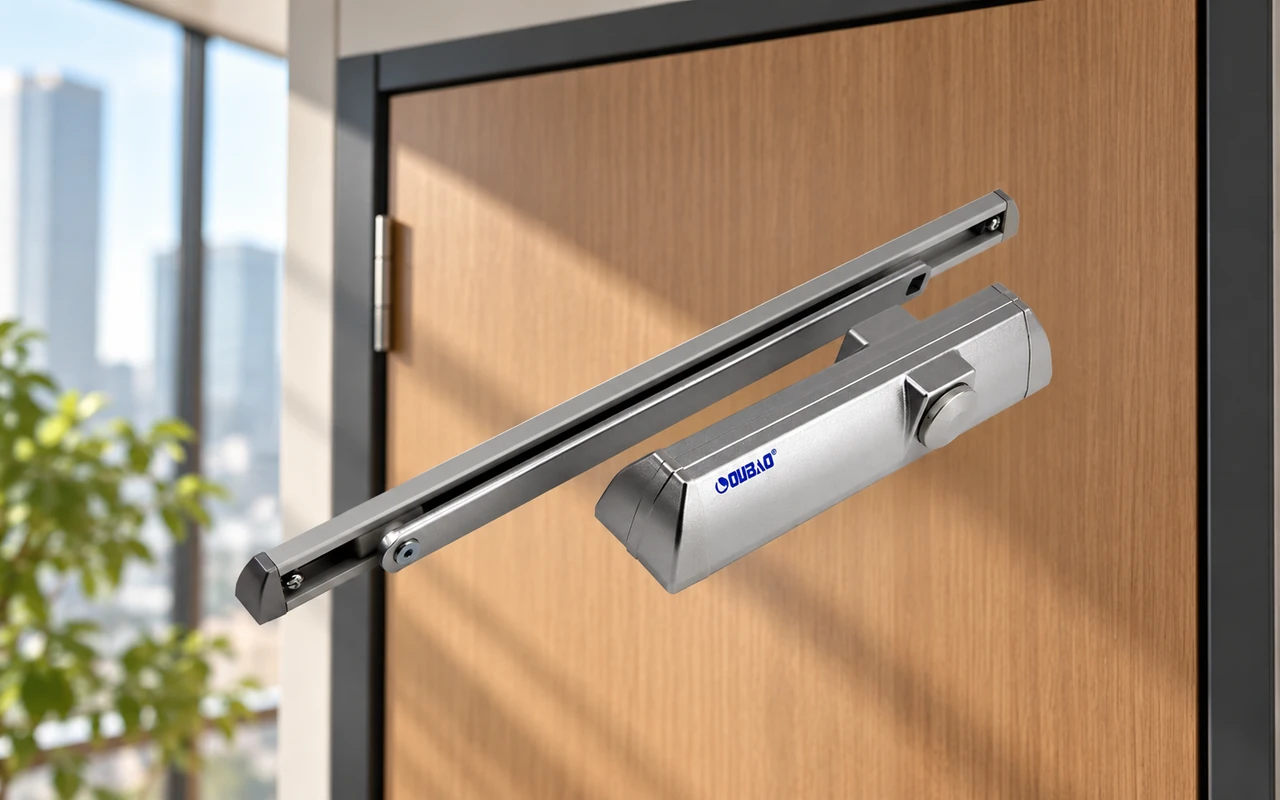
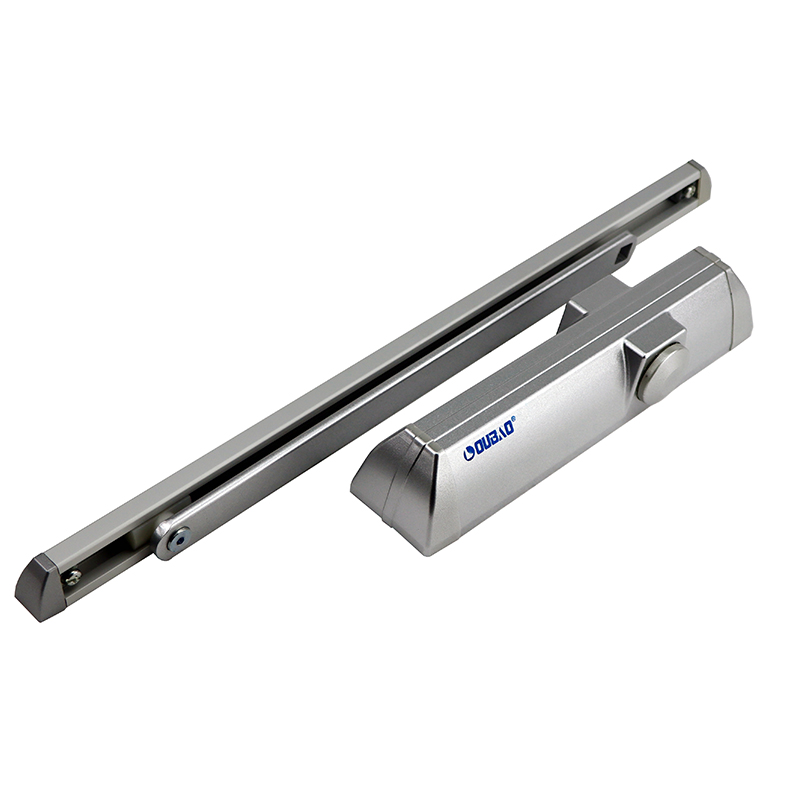
A slide arm, also called a track or guide rail arm, is a single arm that travels along a short track. As the door opens, the arm slides instead of being pushed through a fixed angle. That geometry spreads the load, so the door needs less push to open and closes smoothly with little noise. On accessible routes, hotel corridors and quiet office entrances, low opening effort is usually the whole point. OUBAO’s cam action door closer range is built around it.
What is a scissor arm door closer?
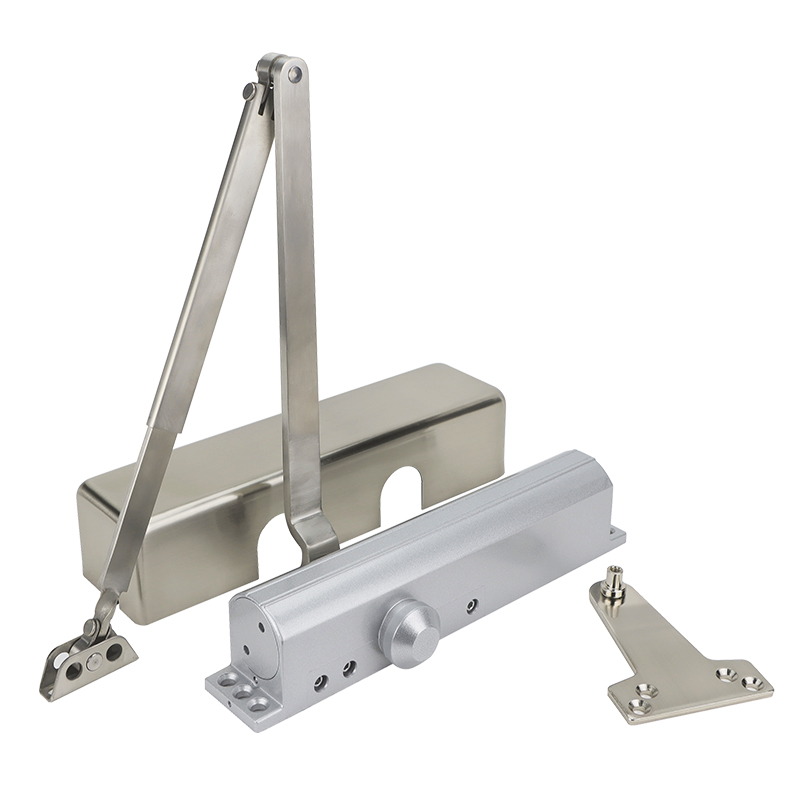
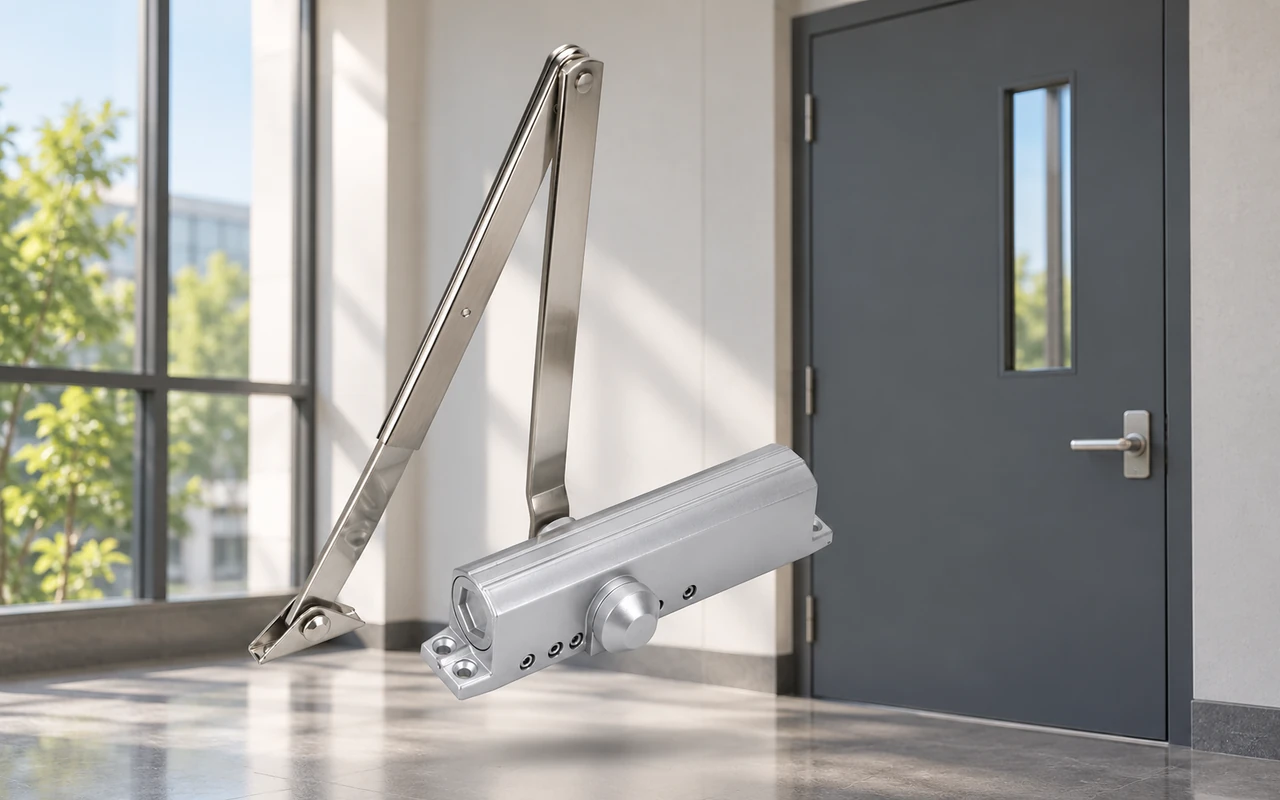
A scissor arm, often listed as a regular or articulated arm, has two sections joined at a pin. It folds and unfolds as the door swings, like a pair of scissors. With no track to position, the fitter can mount the body on the frame header, the door leaf or the top jamb. That flexibility is why scissor arms dominate standard arm and top jamb installations, and why the unit cost is lower.
How Do Slide Arm and Scissor Arm Closers Compare?
| What buyers compare | Slide arm | Scissor arm |
|---|---|---|
| How it moves | Single arm in a track | Two jointed sections |
| Opening effort | Lower | Higher, set by power size |
| Mounting positions | Mainly track and parallel layouts | Standard, top jamb and parallel |
| Appearance | Track visible above the door | Arm only, cleaner on some doors |
| Typical unit cost | Higher | Lower |
| Best fit | Accessible, quiet, premium entrances | General commercial, budget and heavy-traffic doors |
The cost gap is rarely the deciding factor. A slide arm usually costs more than a scissor arm, but the difference per door is small next to the cost of a callback on a door that will not latch.
Does the Arm Style Change the Mechanism Inside?
No. The arm sits outside the body; the mechanism inside controls closing speed and latching. The two are usually sold together, so it helps to know what you are pairing.
Should you pair a slide arm with a cam action door closer?
Usually, yes. A cam action door closer uses a heart-shaped cam and roller instead of a gear drive, so opening effort stays low through the swing while the door still latches firmly. The T90/T30 cam door closer pairs that mechanism with slide arm installation. Its published figures cover 20-80 kg leaves up to 1,100 mm wide at power 2-4, with EN1154 compliance, adjustable speeds and an optional hold-open arm listed on the page. Both sub-models are non-handed, so one part number covers both handings.
- Yes, this series can be equipped with a hold-open arm to realize the hold-open function. This series is designed for various door types, including wooden and metal doors.
When does a rack and pinion door closer suit a scissor arm?
A rack and pinion door closer uses a pinion gear driving a toothed rack. It spans the widest power ranges and more often carries functions such as back check and delay action. The 9016 adjustable power door closer shows the flexibility: a rack and pinion body published at power 1-6 for 15-150 kg leaves up to 1,400 mm, with standard, parallel, top jamb and slide arm installation all listed. One body can serve several mounting layouts, which simplifies the bill of materials.
- Residential & Apartments : Entrance doors, common areas and multi-family housing This series is designed for various door types, including wooden and metal doors.
Which Arm Should You Specify for Common Door Situations?
What if the header is narrow or blocked?
Use a top jamb or parallel arrangement with a scissor arm, and add a drop plate where the top rail is thin. Aluminum storefront framing is often shallow, and a body overhanging a narrow header can twist the frame and cause unstable latching. The storefront door closer guide covers those constraints by door type.
What about a high-traffic entrance?
Specify a rack and pinion body with a scissor arm, and check that back check is included on the exact model. Back check cushions the door at the end of a hard push, where trolleys pass through all day.
Do you need the door to open with less effort?
Go slide arm with cam action. It reaches a lower opening force without stepping down a power size, so you keep a firm latch as well as an easy push. On a route used by wheelchair users or hospital trolleys, that is usually the deciding requirement. The types of door closer for aluminum doors article compares the surrounding formats.
What Should You Confirm Before You Order?
- Mounting position stated on the order, not just implied by the series name.
- Whether hold-open or back check is standard or an option on that sub-model.
- Leaf weight, width and top rail condition matched to the published range for your mounting position.
- Handing, finish and packaging confirmed per variant if the order mixes SKUs.
- Certificates for the exact model and intended market, not the series.
- Quantity, MOQ and lead time confirmed in writing in the quotation.
- Installation instructions and spare parts, if your dealers fit and service the units.
Send the datasheet and the instruction sheet with the shipment; valve settings in the door closer adjustment steps guide apply to the installed unit.
Which Format Fits Your Resale Range?
Ordering the right arm is easier when the supplier builds the range rather than reselling it. OUBAO has made door control hardware since 1987 and keeps die casting, CNC machining, assembly and oil filling in its own workflow, so one supplier can quote a slide arm cam action closer and a rack and pinion scissor arm unit for the same door schedule. Branding and packaging can be discussed through the OEM and ODM process; the wider door closer collection shows which formats suit your market.
FAQ
Is a slide arm door closer better than a scissor arm door closer?
Neither is better in general. Slide arm wins where the door must open easily, close quietly and stay suitable for an accessible route. Scissor arm wins where the mounting position is fixed, the budget is tight or the door takes heavy use.
Can a rack and pinion door closer use a slide arm?
Yes, on models that list slide arm installation. The 9016 datasheet lists standard, parallel, top jamb and slide arm installation for the same body, so the arm is a configuration choice, not a separate product line.
Does a slide arm cost more than a scissor arm?
Usually yes, because the track assembly has more parts. Per door the difference is modest, so compare installed cost, including brackets and fitting time.
Does the arm affect fire door approval?
It can. Fire door hardware is approved as part of a tested assembly, so the arm, closer model and mounting configuration must match the listing. Confirm documents for the exact configuration before ordering.
Next Step
Slide arm or scissor arm comes down to four questions: how easily the door must open, where the closer can mount, how hard the door is used, and what your dealers need to stock. Answer those and the arm type usually chooses itself.
Share your door schedule, target market, required documents and estimated quantity, and OUBAO will confirm the suitable configuration and quote it in writing.