

Quick Answer
A cam action door closer uses a heart-shaped cam and roller instead of a gear rack, so the door opens with less effort while still latching firmly. That makes it the usual choice for accessible entrances. Before you buy, confirm five things with the supplier: the exact model’s door weight and width, its power size, the arm type, its published opening force, and the certificate that names that model. OUBAO manufactures cam action and slide arm closers in China and supplies model-level documents.
This checklist puts those questions in the order a purchasing team actually works through them.
What Makes a Cam Action Door Closer Different?
How does the mechanism reduce opening effort?
Most door closers use a pinion gear driving a toothed rack, so the spring compresses at a steady rate as the door swings. A cam action door closer replaces that drive with a heart-shaped cam and a roller. The roller rides the cam curve, so the spring loads gradually instead of all at once. The user feels a lighter push at the start of the swing, and the closer still has enough force left to pull the latch home.
For a buyer, that means you can hit an opening-force target on an accessible route without stepping down to a smaller, less capable unit. The cam action door closer range is built around that trade-off.
What is a slide arm door closer?
“Slide arm” describes the arm, not the mechanism. Instead of a folding scissor arm, a slide arm door closer uses an arm that slides along a track or channel. Cam action and slide arm are often combined on the same unit, which is why the two terms turn up in the same search.
Why buyers care: the slide arm layout suits surface mounting, keeps a cleaner line on the door face, and takes the final swing quietly. It also fits frames where a scissor arm would foul the head or architrave.
Which Questions Belong on Your Supplier Checklist?
Five groups of questions change the answer you get back.
1. Will the model fit the actual door?
Ask for the published range of the exact sub-model, not the series name. Door weight and door width decide it, and a series often covers several power sizes that no single sub-model matches. On OUBAO’s T90/T30 cam door closer, T90 is published for 20–80 kg door weight at power 2–4, while T30 sits at 40–80 kg and power 3–4. Both are listed up to 1,100 mm door width and both use a slide arm installation. Both are also non-handed, so one part number covers left- and right-hand doors — fewer stock lines and fewer mis-orders.
- Yes, this series can be equipped with a hold-open arm to realize the hold-open function. This series is designed for various door types, including wooden and metal doors.
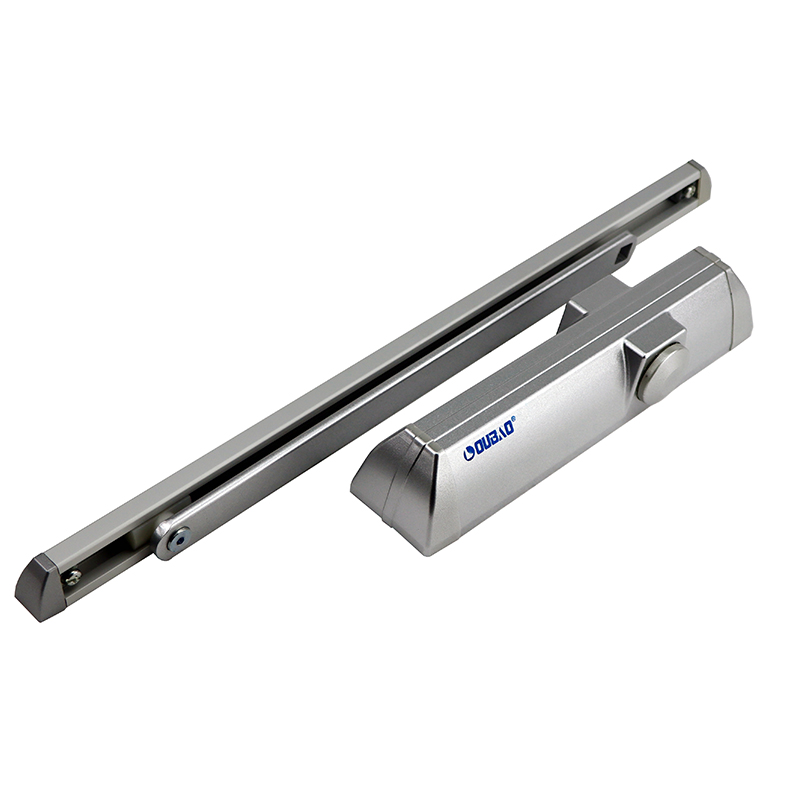
If the door face has to stay visually clean, a concealed cam unit is the alternative. The T96 concealed cam door closer sits fully inside the leaf and frame instead of on the surface.
- The T96 Series is designed for various door types, including wooden and metal doors. Commercial Buildings : Offices, shopping malls, hotels, restaurants and retail stores
2. Which functions are standard, and which are priced extra?
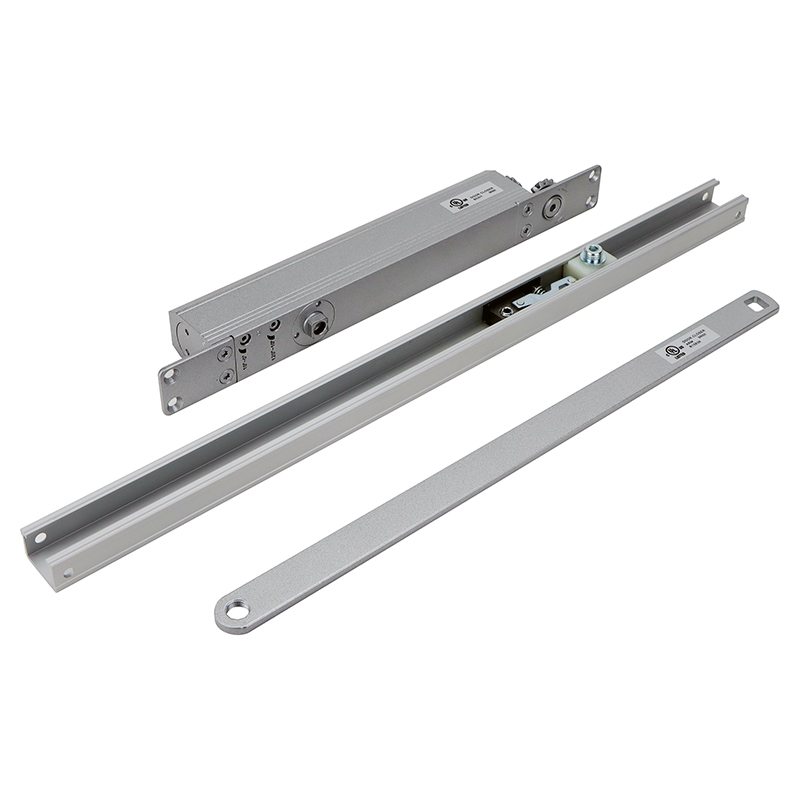
Do not assume. Adjustable closing and latching speed is usually standard; back check, delayed action and hold-open are usually options. If the entrance also needs to stay open for wheelchair traffic or trolley movement, a hold-open arm may be on your list — but check local rules first, because mechanical hold-open is normally not allowed on a fire door. The difference between mechanical and electromagnetic hold-open matters more than most buyers expect, and this hold-open vs non-hold-open comparison sets out where each is acceptable.
Then confirm whether the arm is a separate line item and which finishes are available without a custom run.
3. Which documents cover the exact model?
This is where projects lose time. A certificate issued for one sub-model, or for one tested door assembly, does not automatically cover the series. Ask for the certificate number, the model it names, the power size tested and the door assembly described — then match it to your destination market and fire strategy. Some markets need UL listing, some need CE marking, and some accept a third-party fire test report.
A supplier that holds certification in-house can hand you the report and the model list together. OUBAO’s UL-certified door closer range is grouped that way, so you can check scope before you quote.
4. How is the unit built and tested?
Cycle life and oil retention decide what the closer looks like in year three. Ask about piston machining tolerance, whether oil filling happens in-house, and what endurance testing the model went through. A tighter bore and a controlled fill reduce the weeping and speed drift that show up on busy entrances. If your installers need to correct drift on site, this six-step adjustment guide explains the valves.
5. What are the commercial terms?
Get price per model, MOQ, packaging, lead time and warranty in writing, per SKU. Series-level figures are not enough, because minimum order quantity and lead time often change between a standard item, a custom finish and a private-label build.
How Do You Compare Cost Without Losing the Spec?
Cam action usually costs more than a budget rack and pinion unit, because the cam and roller drive is more precise to machine. That premium buys what an accessible entrance needs: a light push with a firm latch. If you buy for a mixed building, the practical move is to keep a budget closer for back-of-house doors and specify cam action where opening effort is checked. The full door closer range shows how both families sit side by side.
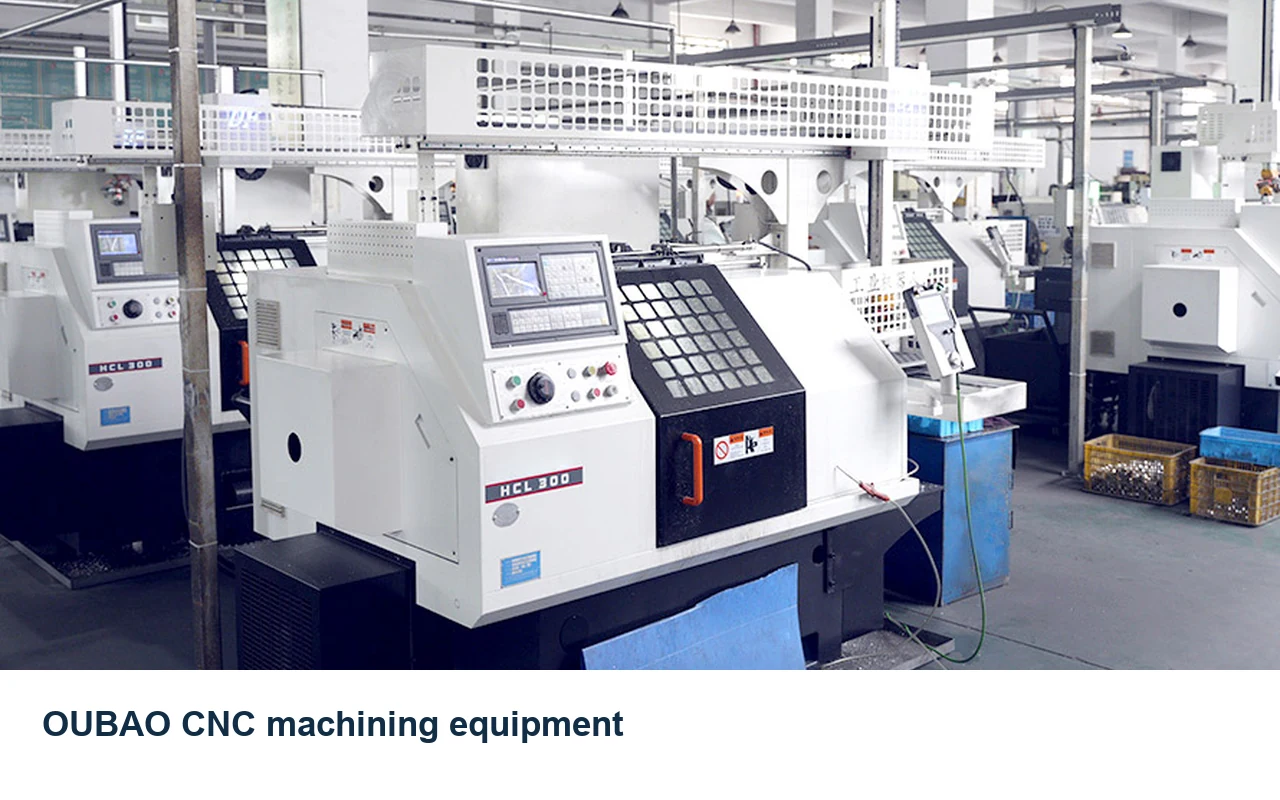
OUBAO manufactures door closers and magnetic locks in China, with die casting, CNC machining, oil filling, assembly and finishing handled in-house across a 106,000 m² base. Because both mechanisms are produced on the same site, a distributor can quote a cam action line and a budget line from one supplier with shared documentation and spare-parts support. Private-label OEM/ODM programs start from an MOQ of 300 sets, confirmed per model and finish — so the checklist above doubles as the brief to send when you ask for a quotation.
FAQ
Is a cam action door closer the same as a slide arm door closer?
No. Cam action describes the internal mechanism; slide arm describes how the arm travels in a track. They are often combined, but confirm both on the model sheet rather than assuming.
Can a cam action door closer go on a fire door?
Yes, if the exact model carries the fire certification your project requires and the tested door assembly matches. Check the model-level document, not the series, and never fit a mechanical hold-open arm to a fire door.
Do I need an accessible entrance to justify cam action?
No. Buyers also specify cam action for premium retail, hotels and quiet corridors, where the light, smooth swing suits the space. Accessibility requirements simply make the benefit measurable.
What should I send with my first enquiry?
Door weight and width, frame type, mounting position, required functions, target market, certification needs and estimated quantity per model. A supplier can only confirm fit and price against those details.
Build the Checklist Before You Build the Order
A cam action door closer solves a specific purchasing problem: it lets an accessible entrance open easily and still latch reliably. The mechanism is only half of it — fit data, the function list, model-level documents and commercial terms do the rest. Work through the checklist above and you will compare suppliers on the same footing.
Send your door schedule — leaf weight and width, frame and mounting details, required functions, target market and the documents you need — and OUBAO will confirm the suitable cam action or slide arm model and return a written quotation.