


Quick Answer
A shear magnetic lock combines magnetic attraction with mechanical engagement to resist movement along the lock face. Its design makes concealed installation possible, with certain models suitable for applications such as sliding and double-acting doors. This makes it useful where a conventional direct-pull arrangement isn’t suitable.
What Is a Shear Magnetic Lock?
A shear magnetic lock, or shear maglock, is an electromagnetic lock designed to resist force moving parallel to the lock face.
When energized, the magnet draws the armature into position. The two parts then engage mechanically to help resist movement in the shear direction. Depending on the design, this can involve raised locking features engaging corresponding recesses in the opposing component.
This combination of magnetic attraction and mechanical engagement is what distinguishes a shear lock from a conventional direct-pull maglock.
How Is a Shear Maglock Different From a Standard Maglock?
The two locks differ in the way they resist the door opening.
For example, a standard magnetic lock uses electromagnetic force to hold the armature against the magnet face and resist a direct pulling force.
In contrast, a shear lock uses electromagnetic force to bring its components into engagement, then adds mechanical engagement to resist movement parallel to the lock face.
The style of installation alone doesn’t determine whether you have a standard or shear maglock. Additionally, not all recessed locks are technically defined as shear locks.
OUBAO’s OB280, for example, is a mortise-installation version of its conventional 280 kg (600 lb) magnetic lock. It provides a useful comparison because the hardware can be recessed without using the shear-lock operating principle.
Where Are Shear Magnetic Locks Commonly Used?
Shear locks make sense when the movement of the door or the desired installation makes a conventional surface-mounted maglock less suitable.
Depending on the model and mounting hardware, they can be used on single-acting, double-acting, and sliding doors. Options are also available for wood, steel, aluminum, and suitable glass-door assemblies.
Concealment is another reason to use one. Shear locks can be designed with the lock and armature recessed into opposing surfaces rather than using the prominent face-to-face surface arrangement common with direct-pull maglocks. As a result, the hardware can remain largely hidden within the door and frame.
Some shear locks support horizontal and vertical mounting, but the permitted orientation depends on the model and application. Sliding-door installations may have their own mounting requirements, so always check the manufacturer’s instructions.
Why Does Alignment Matter With a Shear Lock?
It matters because this type of lock requires the magnet and armature to reach their correct position for their mechanical features to engage.
These components may not engage correctly if the door sags or no longer closes in the correct position, preventing the lock from producing its intended holding force. This makes proper installation all the more critical.
Instead of relying on a generic tolerance, make sure to follow the manufacturer’s specified alignment and clearance procedures. Check whether the door closes consistently before fitting the shear lock. You can also recheck the alignment later if the door begins to move differently with use.
How Strong Are Shear Magnetic Locks?
Holding force varies by model, so there isn’t one rating that applies to every shear magnetic lock. Check the manufacturer’s published shear holding force for the specific model rather than assuming its performance from the lock’s size or installation style.
These ratings also shouldn’t be compared blindly with those of conventional maglocks. The two designs resist force differently, and the door movement, mounting arrangement, and security requirements all matter when choosing a lock.
What Are the Advantages of a Shear Maglock?
The biggest advantage is flexibility on openings where a conventional direct-pull arrangement isn’t ideal.
A shear lock can provide concealed electromagnetic locking without a prominent surface-mounted magnet. Certain models can also accommodate double-acting doors that swing in either direction and sliding doors that move parallel to the frame.
Many shear magnetic locks are also designed as fail-safe devices, meaning they release when power is removed. However, check the power-loss behavior of the specific model rather than assuming every shear lock operates the same way.
What Are the Disadvantages of Shear Magnetic Locks?
The trade-off is that shear locks can demand more precision during installation.
Both the lock and armature may need accurate mortise preparation, and their mechanical engagement makes alignment particularly important. Door sag or movement that might cause fewer problems for some other locking arrangements can interfere with a shear lock’s operation.
That means the condition of the door, hinges, frame, and mounting surfaces should be checked before installation. A shear lock also shouldn’t be selected simply because concealed hardware looks cleaner. The door movement and available installation space still need to suit the specific model.
When Should You Choose a Shear Lock Instead of a Standard Maglock?
Consider a shear maglock when you need concealed electromagnetic locking, have a double-acting opening, or need a lock designed around the movement of a sliding door.
For a conventional single-acting door where visible surface hardware isn’t a concern, a direct-pull maglock may provide a simpler solution.
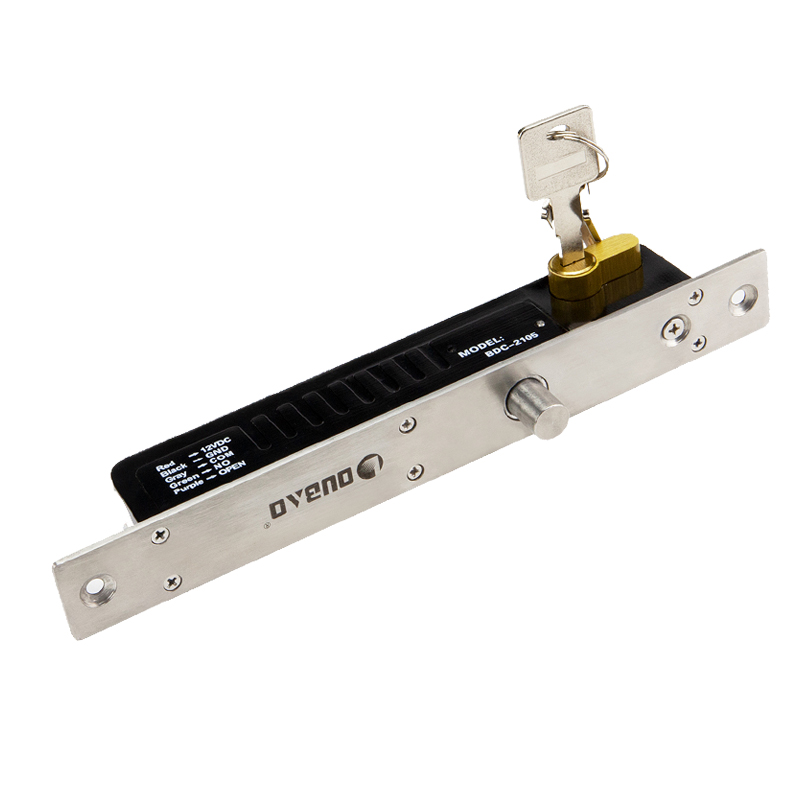
There are other concealed options as well. An electric bolt, for example, uses a physical bolt rather than magnetic shear engagement. OUBAO’s OB-13 is a concealed electric bolt that operates as fail-secure, meaning it remains locked when power is lost. That makes it a different option from a shear magnetic lock when power-loss behavior is part of the specification.
- TypeFail-secure electric bolt lock
- ApplicationAccess control systems
- SecurityRemains locked during power outages
What Should You Check Before Installing a Shear Magnetic Lock?
Start with the door movement, frame construction, available mortise space, and the manufacturer’s approved mounting orientation. Make sure the door closes consistently enough for the lock and armature to align on every cycle.
Then check the required voltage, holding force, wiring arrangement, door material, and any accessories needed for the installation. The complete locking system must also comply with the building, fire, access-control, and egress requirements that apply to the opening.
If a conventional maglock is a better fit for the opening, you can compare OUBAO’s electromagnetic locking options by holding force, installation style, and other specifications.