


Quick Answer
A magnetic door lock kit combines the hardware needed to secure and release a door electronically. At minimum, you’ll need a magnetic lock and armature, but a complete setup may also require additional mounting and access-control hardware. Check what’s included before ordering, as magnetic lock kits can vary considerably.
What Is Included in a Magnetic Door Lock Kit?
The list of components that a magnetic lock kit has to include isn’t set in stone. Some kits contain little beyond the maglock and its armature plate. Other types include several parts required for an access-control system.
Based on the installation and kit, you may need:
- Magnetic lock and armature: These are the main components that physically hold the door closed.
- Power supply: Provides the DC power the magnetic lock needs to stay locked.
- Mounting brackets: Help fit the lock and armature to different door and frame configurations.
- Reader or keypad: Lets authorized users request access using the credentials supported by the system.
- Exit control: Allows people inside to release the lock when they need to leave.
- Monitoring hardware: Reports door or lock status to the access-control system.
Just because you’re purchasing a magnetic door lock kit doesn’t mean all of these components are inside the box. Check the included hardware against what the installation actually demands.
How Does a Magnetic Lock Kit Work?
A conventional maglock stays locked as the magnet gets energized via electrical power. The magnet attracts the armature plate, producing the force that holds the door closed. The magnetic bond releases when the power going to the lock is interrupted by the system.
The timing of the release is determined by the components of the access-control system. For instance, the system can receive credential information from a reader when someone requests entry. You can also request the lock to release from inside by using an exit button or request-to-exit device.
Our guide to magnetic lock installation covers how this hardware fits into the physical installation in more detail.
How Do You Choose the Right Magnetic Lock?
Start with the door rather than the accessories.
Check the door construction, direction of opening, and available mounting space. A lock that works well on a conventional framed door may need a different mounting arrangement when used on glass or another unusual opening. Then determine the holding force and installation method required for the project.
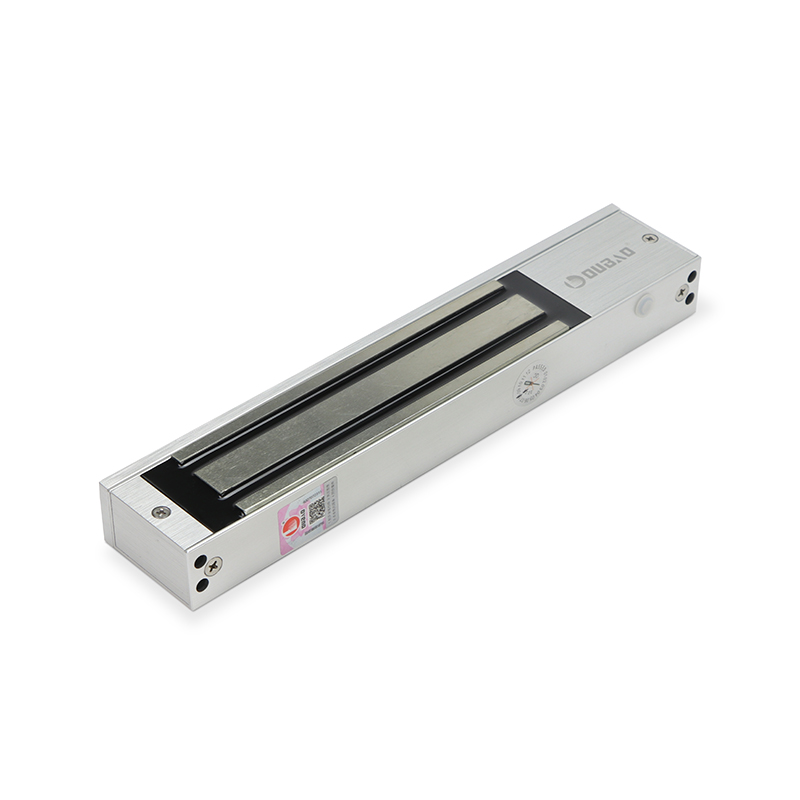
As a leading manufacturer of magnetic locks, OUBAO offers models for different door and installation requirements. The OB280 Series provides 280 kg (600 lbs) of holding force and includes hanging and mortise-installation variants for wooden, glass, and metal doors.
The CK280 provides the same rated holding force but is positioned by OUBAO as a budget-friendly alternative for cost-conscious commercial and residential applications. It is also available in hanging and mortise configurations.
If you’re comparing manufacturers as well as individual models, see what to consider when choosing a magnetic lock brand.
- Holding Force280kg (600lbs)
- MaterialHigh-grade aluminum housing
- CertificationsUL Listed, CE, FCC, RoHS, REACH
Which Mounting Brackets Do You Need?
The right bracket depends on the lock and the door you’re installing it on.
L and Z brackets are commonly used to adapt magnetic locks to different door and frame arrangements. Other openings may require specialized hardware. For example, a frameless glass door may need a glass-specific bracket that provides a suitable mounting point without treating the glass like a conventional door frame.
Bracket compatibility matters too. Check that the bracket fits the specific lock and suits the mounting arrangement rather than assuming brackets with similar shapes are interchangeable.
Once mounted, the hardware needs to position the armature so it meets the magnet correctly when the door closes. Poor alignment can prevent the lock from developing its intended holding force.
How Do You Choose a Maglock Power Supply?
Start with the voltage specified for the lock. For example, both the OB280 and CK280 operate at 12VDC, with 24VDC available upon request.
Voltage isn’t the only consideration. The power supply also needs enough capacity for the electrical load placed on it. If other access-control components share the supply, their requirements need to be considered as part of the complete system.
Cable length matters too. Longer runs can create voltage drop, particularly when the wire is undersized. Make sure the lock receives its specified voltage under operating conditions rather than selecting a maglock power supply based only on the number printed on its label.
What Are the Most Common Magnetic Lock Kit Buying Mistakes?
One mistake often seen is selecting a magnetic lock kit based on just the holding force. Keep in mind that if there’s poor alignment or mounting, even the sturdiest of locks won’t compensate for it.
You can also get a unit with missing or incompatible components if you assume everything is included. Make sure to check the contents of the kit and verify that the mounting hardware works with the chosen lock and opening.
The installation environment should also factor into your buying decision. If the lock will be ultimately used outdoors, don’t pick an indoor model just because its holding force fulfills your requirements. The hardware you buy has to be appropriate for its level of exposure.
Finally, check any applicable code and safety requirements. A conventional magnetic lock releases when power is removed, but that alone doesn’t establish compliance for the complete installation.
The best magnetic lock kit is therefore the one whose components work together and fit the actual opening. Check what you’re getting, make sure the hardware is compatible, and choose the lock and electrical setup around the requirements of the door.