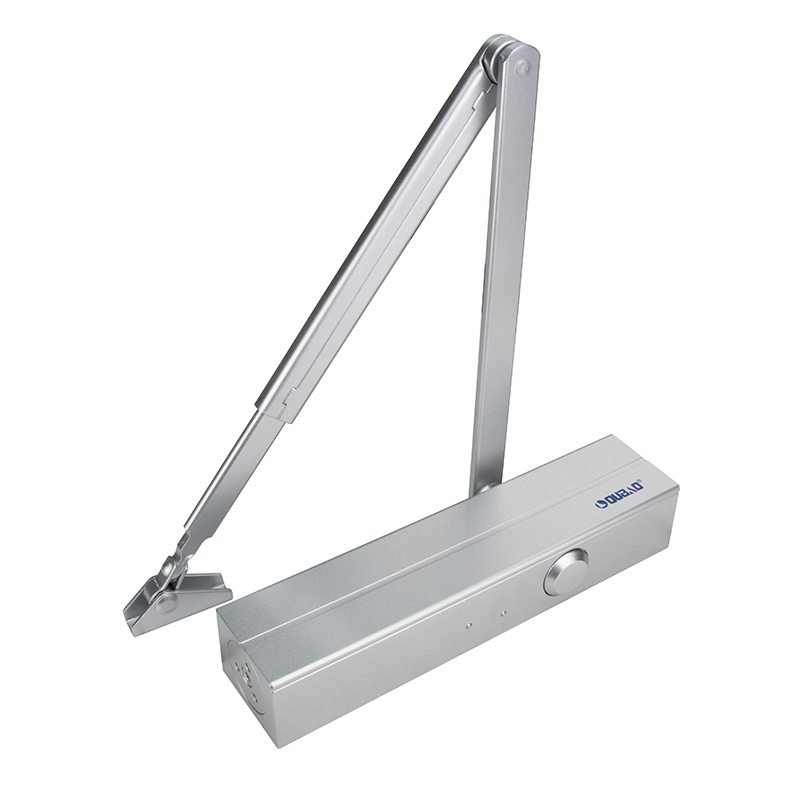


The delay time adjustment on a delayed action door closer controls how long the door stays fully open before the closing cycle begins. Turning the dedicated delay valve lets you set that pause anywhere from 0 to about a minute.
How the Delay Function Works
Anyone pushing a cart, carrying supplies, or moving slower through a doorway knows how fast a standard door can shut. A delay action door closer solves that by holding the door open for a set period before the normal closing motion takes over. That pause usually runs from full open down to around 70 or 75 degrees. Once the delay period ends, the regular sweep and latch speeds pick up and finish closing the door as usual.
Adjusting the Delay Valve
The delay function runs through its own dedicated valve, often labeled “DA,” separate from the sweep, latch, and backcheck valves. You’ll need an Allen wrench or small flathead screwdriver to turn it.
To increase the delay time, turn the valve counterclockwise. This slows the release of hydraulic fluid and keeps the door open longer, up to a minute on many models. To decrease the delay time, turn it clockwise instead, which speeds the cycle back up. To turn the feature off entirely, keep turning clockwise until the valve stops.
Make small adjustments as you go, a quarter turn at a time, and test the door after each change. Delay settings are easy to overshoot if you turn too much at once.
Installation and Setup
Every model handles spring tension and hydraulic settings a little differently, so checking the delay action door closer manual for your specific unit matters before you start adjusting anything.
Delay action door closer installation generally follows the same core steps across most brands:
- Mark and drill. Use the included template to mark hole positions on the door and frame.
- Mount the body. Secure the hydraulic body to the door with the valves facing the hinge.
- Install the arm. Attach it to the frame so it sits perpendicular to the door, which keeps tension even.
- Tune the valves. Set the sweep, latch, and delay valves to match your entryway.
Choosing the Right Unit
Not every door needs delayed closing, but for certain settings it makes a real difference. The best delay action door closer models usually come with adjustable spring sizes, often EN 1 through 6, and valves that resist tampering in busy commercial spaces. Hospitals, healthcare facilities, and aged-care centers rely on this feature often, since it gives people more time to clear the doorway safely, especially anyone moving with a wheelchair, walker, or cart.
If you’re looking for a reliable, commercial-grade option with this feature built in, the OUBAO 2026 series square door closer offers adjustable delay action alongside independent hydraulic speed control, making it a solid fit for high-traffic or accessibility-focused entries.
- Closing ForceEN 2-6 or 1-5
- Body Dimensions263 mm (L) * 60 mm (W) * 47.5 mm (H)
- Footprint100 mm * 43 mm