


Quick Answer
Request four drawings before approving a hidden door closer order: the dimensional (outline) drawing, the routing template that sets the door-leaf and frame pockets, the fitting drawing that shows arm and hinge-side alignment, and a shop drawing tied to your door schedule. Send your door schedule and frame section first, because a concealed door closer drawing is only useful when it matches the door it goes into. OUBAO supports this stage through its concealed range and OEM/ODM engineering, confirming door weight, door width, power size, functions, brackets, finish and packaging model by model.
What This Guide Helps You Decide
If you source hardware for a door-control brand, a distributor range or a project package, you need the same thing from every supplier: drawings you can hand to a joiner, a fabricator or an architect without a phone call. This guide sets out the drawing set to request, the information to send first, and the checks that stop a pocket being cut in the wrong place. It is written for buyers and purchasing managers, not for engineers.
Why Do Drawings Matter More for a Hidden Door Closer?
Which parts of the door does a concealed closer sit inside?
A hidden door closer — also called a concealed or invisible door closer — is recessed into the door leaf, the frame header, or both, so nothing shows when the door is closed. That is what buyers want visually, but it also means the closer body and its track arm share space with the door’s own structure. Space has to be cut, not just drilled.
What happens when the drawing is wrong?
A surface closer that sits too low is a bracket adjustment. A concealed unit cut in the wrong position is a damaged leaf: on a solid timber or fire-rated door, the pocket is not easy to repair. The fix is expensive and late. That is why the pocket drawing, not the product photo, carries most of the risk in a hidden closer order.
Which Drawings Should You Request Before You Quote?
1. Dimensional or outline drawing
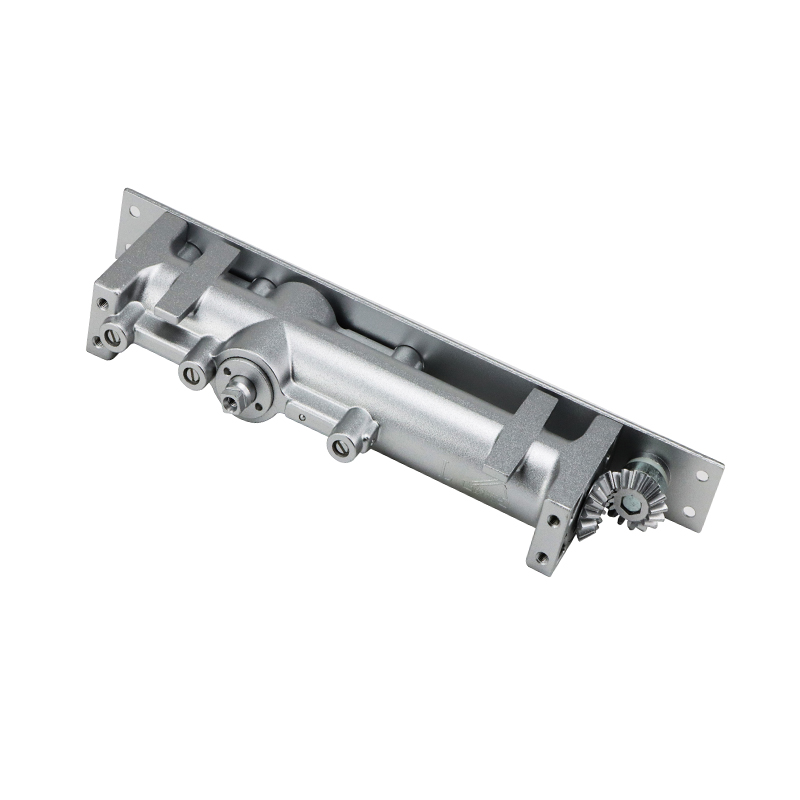
This shows the closer body size, mounting hole centres and the space the unit needs. Use it to confirm the unit physically fits the leaf and header before price enters the conversation. For example, the body of OUBAO’s 1035 series measures 237 mm × 81 mm × 37 mm, a slim profile that suits standard door sections.
- The 1035 series is designed for various door types, including wooden and metal doors. It supports doors with a maximum width of 1250mm and a maximum weight of 100kg.
2. Routing template or template drawing
The template is the most important single document. It shows where to cut the door-leaf pocket and the frame pocket, with depth and screw positions. Some suppliers ship a physical template in the box; others send a 1:1 PDF or CAD file. Ask which one you will receive, and whether one template covers both pockets.
3. Installation or fitting drawing
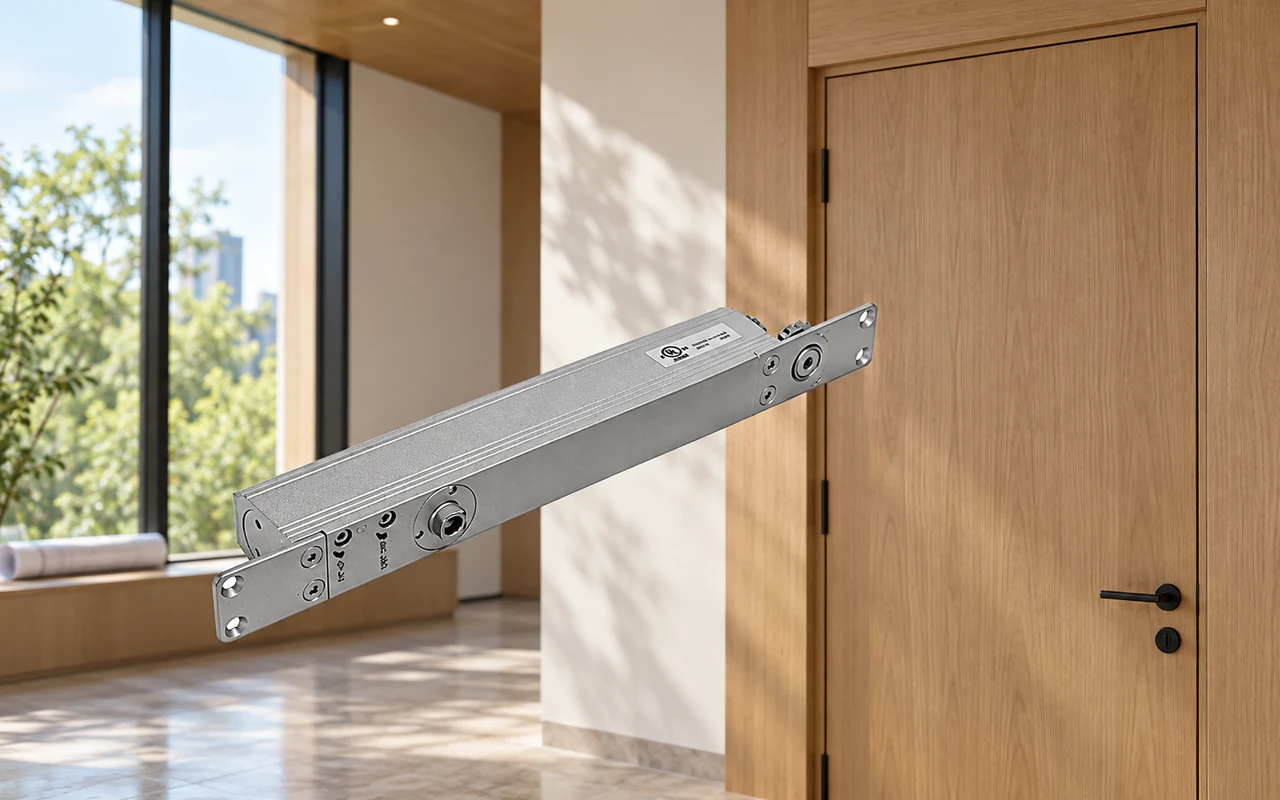
This is different from the template. It sets out the geometry: where the guide track runs, the hinge-side offset, and how the arm and pivot line up. Misalignment here is the usual cause of a concealed closer that will not latch; OUBAO’s guide to installing concealed door closers covers the same alignment points.
4. Shop drawing tied to your door schedule
A shop drawing maps the standard product to your actual door in your actual frame. It is the document an architect or main contractor signs off, and the one your fabricator works from. Ask for it in millimetres, at a stated scale, with the door thickness, reveal and top rail shown.
5. Accessory and bracket list
Ask for this within the same drawing set rather than separately. A concealed closer order can include a guide track, an arm, screws and an optional hold-open arm, so the drawing should name each part and match the packing list.
What Should You Send With the Drawing Request?
Which door and frame details are enough to start?
Send the door schedule: leaf width, leaf weight, door thickness, material, handing and whether the door is external. Then add a frame section or profile drawing, because header depth decides whether a frame pocket is possible at all. On a non-handed model such as the OUBAO 1035, one unit covers both handings, which simplifies stock, but the template still has to match the frame side.
What site evidence reduces revision cycles?
Photos of the opening, header, hinge type and any obstruction above the door usually remove a round of questions. Note local requirements too: if the door is fire rated, the drawing must describe the tested assembly, not an adapted version, and the fire-rated closer guide explains why that scope matters when an inspector asks for evidence.
How Do You Check the Drawings Before Releasing a Bulk Order?
What should appear on an approved drawing?
Check five things: the exact model and power size, dimensions in millimetres with a clear scale, pocket depths for both leaf and frame, the revision number and date, and the accessory list. If the drawing covers a range of sub-models, ask for the page that applies to the unit you are buying.
Should you fit one door before ordering in volume?
Yes, where the project allows it. Mount one unit on a mock-up or a single door first, then confirm two things: the arm does not bind through the full swing, and the door latches without extra effort. A trial fitting costs one door. A wrong template on a pallet of hardware costs a site programme.
What Should You Ask For Besides Drawings?
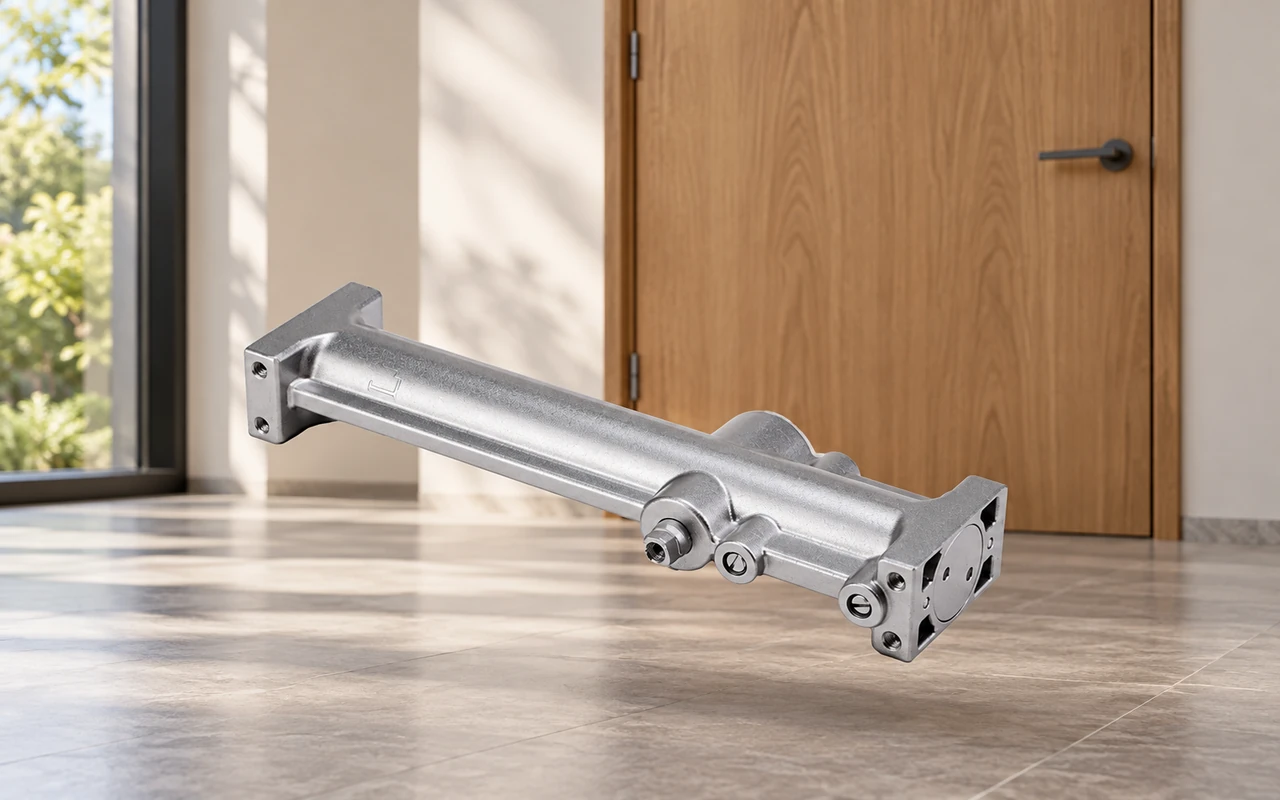
Three documents belong in the same request: the current datasheet for the exact model, the installation instructions that travel with the order, and the certificate or test report covering the model and configuration you are buying. Series-level claims are not enough for a project approval, because a mark on a catalogue page does not confirm the pocket detail or the tested assembly.
- This series is designed for various door types, including wooden and metal doors. Yes, this series features a non-handed design.
How OUBAO Supports Drawing Requests
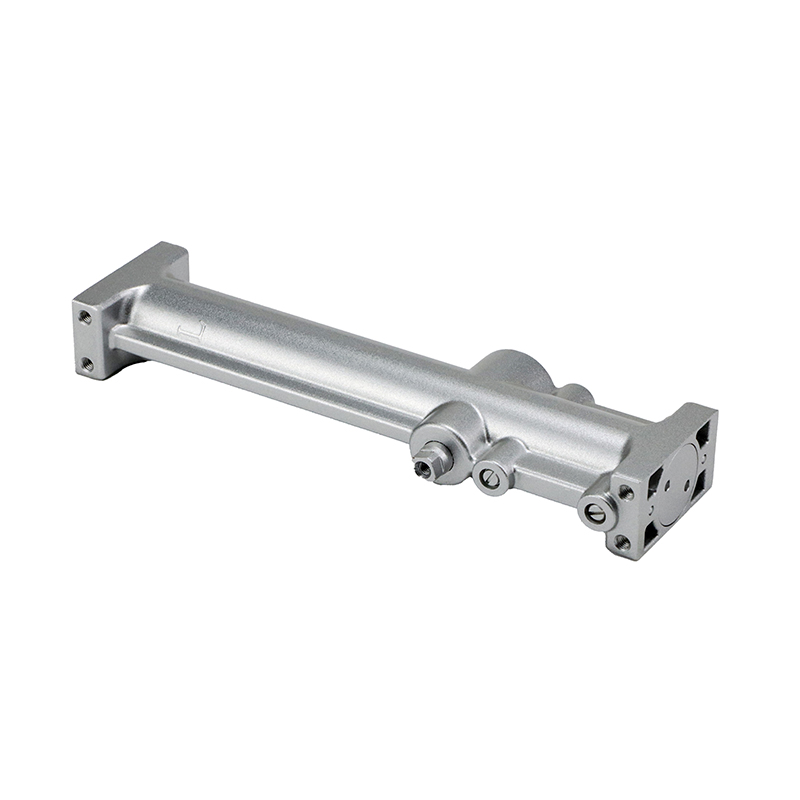
OUBAO manufactures door closers and magnetic locks in China and offers OEM/ODM support. Its concealed line-up covers three formats: the adjustable 1035 with an EN 3–5 power range for doors up to 100 kg and 1,250 mm wide, the UL-certified 100 Series with independently adjustable closing and latching speeds, and the T96 cam closer for lighter leaves. The full set sits on the concealed door closer page.
Manufacturing covers die casting, CNC machining, oil filling, assembly and finishing in house, so drawing and production questions usually reach the same team. Buyers can send a door schedule or a project requirement through OUBAO’s OEM and ODM channel and settle door weight and width, power size, functions, brackets, finish and packaging before the quotation is fixed.
FAQ
Does a hidden door closer come with a template?
Usually yes, but ask whether it is a physical template, a 1:1 printed drawing or a CAD file, and confirm that it covers both the leaf and frame pockets. That one question prevents a site delay.
Can you scale a template from a catalogue PDF?
No. A catalogue image is not a production drawing, and scaling it introduces errors that a slim 37 mm body cannot absorb. Request the template at 1:1 or in CAD format.
Are supplier drawings confidential?
Most manufacturers treat custom drawings and tooling files as confidential, and buyers often ask for the same. Agree the position in writing before you share your own shop drawings or a client’s project files.
Do drawings extend the lead time?
Drawing preparation and approval sit ahead of production, so the practical question is how quickly you can return an approved drawing. Put that approval step in your order timetable instead of assuming the factory clock starts on PO date.
Order the Drawing Set Before the Closer
A hidden door closer is bought on the pocket drawing, not the product photo. Request the outline drawing, the routing template, the fitting drawing and the shop drawing; send your door schedule and frame section with the enquiry; and approve one trial fitting before volume. Sharing the door type, target market, required documents, preferred models and estimated quantity lets OUBAO confirm the suitable concealed configuration, the accessory list and a model-specific quotation.