
Quick Answer
Before you place a bulk OEM order with a fire rated door closer manufacturer, verify seven things: the exact model and configuration the certificate covers, the fire test standard your market requires, whether the closer is listed as part of a complete door assembly, proven self-closing and latching at your door weight, batch-to-batch production control, a complete documentation pack, and the customization limits that keep the rating valid. OUBAO holds CE, UKCA, UL and Certifire certification in-house, so most of these answers come from factory records.
What This Guide Helps You Check
A fire door is a life-safety product, and the closer decides whether it closes and latches when it matters. Get it wrong and the problem surfaces at a site inspection months later, not in your warehouse. The seven checks below separate a supplier you can build a private-label line on from one that only ships good samples.
What Makes a Fire-Rated Door Closer Different?
A standard closer only has to close a door. A fire rated door closer has to keep closing and latching under fire conditions, as part of a tested door assembly. That is why certification matters more than the specification sheet.
Three ideas do most of the work:
- Positive pressure. North American fire tests (UL 10C) simulate a real fire pushing hot gas against the door, not just a still furnace.
- Self-closing and self-latching. The closer must return the door to the frame and hold it latched, every cycle, without help.
- Assembly, not component. The rating belongs to the full opening — door, frame, closer, hinges and seals — not to the closer alone.
What Are the 7 OEM Quality Checks Before a Bulk Order?
1. Which exact model and configuration does the certificate cover?
This is the check buyers skip most often. A series certificate does not automatically cover every sub-model, arm, function or finish. Ask for the current document and match it line by line against the SKU on your purchase order.
A closer with a back check may be covered while the same body with delay action or a slide arm is a different listing. If a supplier cannot name the exact file, treat the claim as unproven. Our guide to how door closers are graded explains the structure behind those documents.
2. Does the fire test standard match your destination market?
Fire ratings are not universal. The right document depends on where the doors will be installed:
- United States and Canada: UL / UL 10C listing, with NFPA 80 governing installation and inspection.
- Europe: EN 1154 for the closer itself, EN 1634 for the assembly test.
- UK and selected export markets: Warringtonfire Certifire third-party certification.
A fire rated door closer manufacturer selling into several regions usually holds more than one scheme. OUBAO publishes UL and UL 10C listed closers and Warringtonfire Certifire models as separate categories, which is the practical way to shop it: start from the market, then choose the range.
3. Is the closer listed as part of a complete door assembly?
Passing a component test is not the same as being listed inside a door assembly. A fire rating transfers only when the whole opening is built as tested: correct closer, mounting, arm function, door and frame.
Two details catch buyers out. Hold-open arms are often permitted only in specific configurations, so check before stocking them for fire doors. And mounting position changes both the geometry and the usable power size, so “supports standard, parallel and top jamb” needs per-model confirmation. The fire rated door closer selection guide covers those limits in more depth.
4. Can the unit prove self-closing and latching at your door weight?
Spring force has to match the leaf, not the catalogue page. Confirm the published door weight and width range for the exact configuration, then check how the power-size adjustment works in practice.
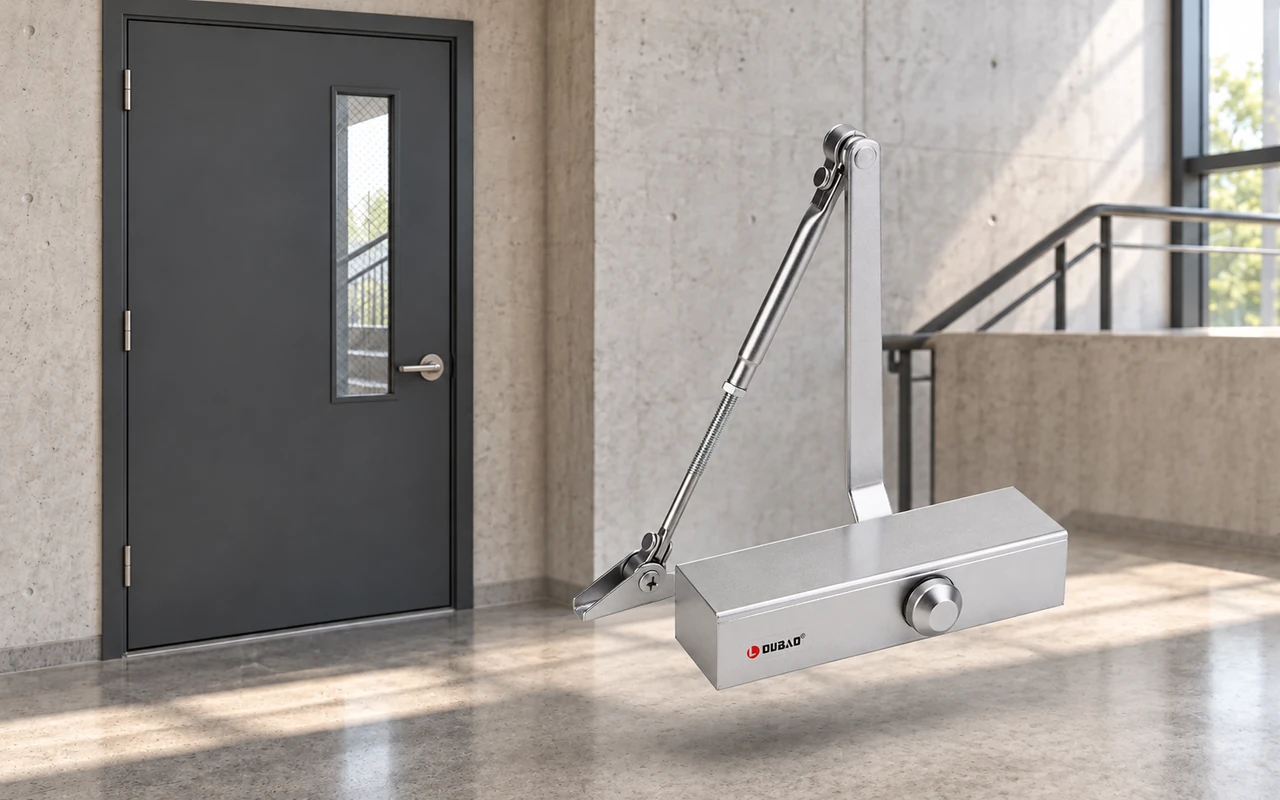
The OB03 heavy-duty cast iron door closer is a useful reference point: a surface-mounted, non-handed unit carrying UL, UL10.C and ANSI 156.4 Grade 1 listings, adjustable from power size 1 to 6 on site, for leaves up to about 150 kg and widths up to 1,400 mm. OB03T covers heavier leaves with a wider footprint, and one non-handed SKU serves both handings — simpler stock, fewer fitting errors.
On heavier openings, grade and cycle evidence matter as much as force, so match the ANSI/BHMA grade to the traffic the door will see.
5. Can the factory prove batch-to-batch consistency?
A good sample only proves a good sample. You are buying the thousandth unit behaving like the first, six months later, so ask how the supplier controls that during production rather than at final inspection.
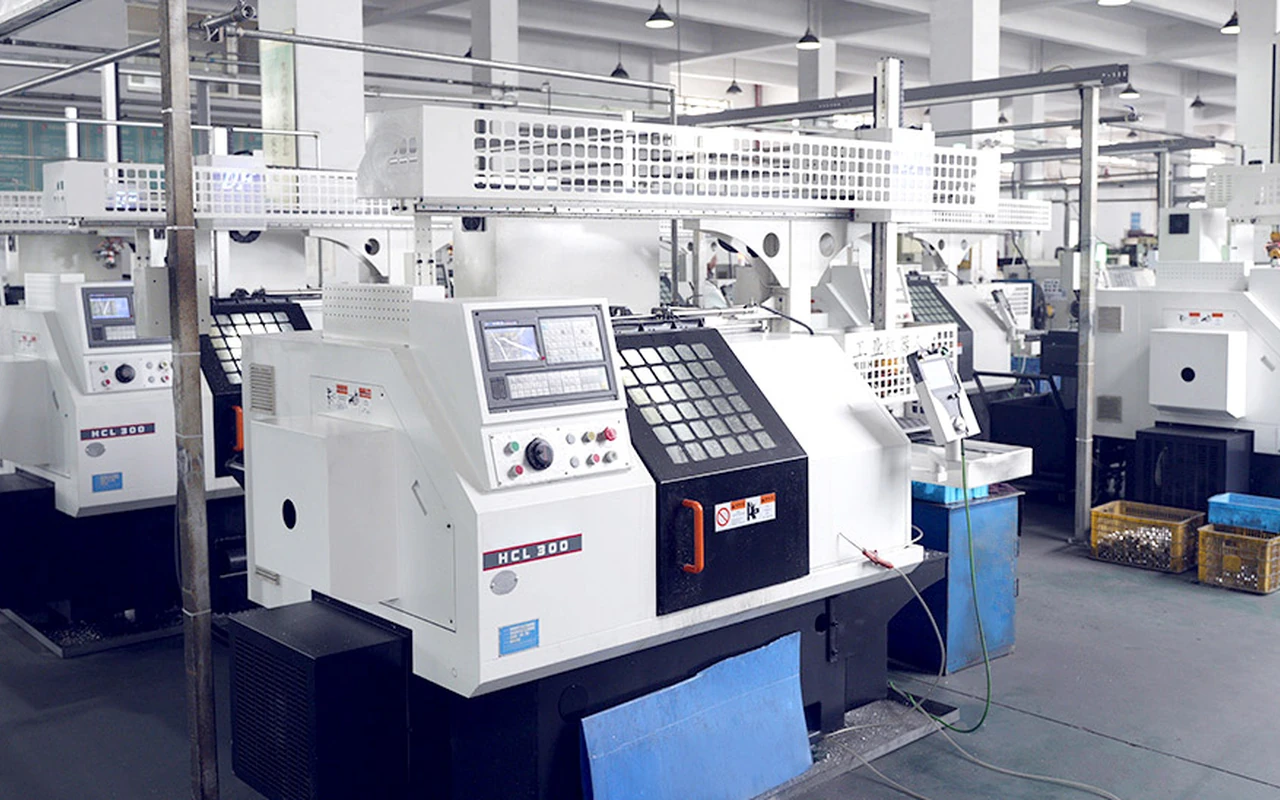
Look for incoming-material verification, stated machining tolerances and a functional check on every unit rather than a sample. OUBAO publishes a process built around material spectrum analysis, piston tolerances of 0.01–0.015 mm, MES traceability and 100% individual latching verification before packing, alongside in-house endurance and salt-spray testing in its quality control workflow.
6. Is the document pack ready before you pay a deposit?
Documents arrive late far more often than products do. Before committing to a bulk order, confirm what you will receive and when:
- Current certificate for the exact model and standard version.
- Third-party test reports you can forward to a specifier.
- Installation instructions for every arm configuration you stock.
- Labelling, marking and packaging that match your market’s rules.
- A written statement of what the listing covers — and what it does not.
If documents are only promised after the first container ships, that is a planning risk.
7. What can you customize without breaking the rating?
Branding, packaging, silk-screen logos and finish colours are usually safe, because they do not change how the door closes. Spring strength, arm type, hole pattern, body dimensions and mounting geometry are not: those sit inside the tested configuration and may require retesting.
Draw that line in writing. Confirm which changes keep the existing listing and which trigger a new test, then lock the commercial terms around the same list: sample and approval process, per-SKU minimum quantity, lead time from deposit, warranty scope and spare parts.
How Does OUBAO Support Fire-Rated OEM Programs?
OUBAO has manufactured door control hardware since 1987 from a 106,000 m² vertically integrated base in Lishui, Zhejiang, and publishes an output of more than six million door closers a year. Certification for CE, UKCA, UL, ANSI/BHMA Grade 1 and Warringtonfire Certifire is held in-house, with third-party reports available for review before an order.
Two things tend to matter most to buyers. The range covers surface-mounted, cam-action, concealed and guide-rail formats, so a single door closer line can serve several markets and door types. The OEM and ODM programme works from your door schedule, target market and required documents, and is published as starting from 300 sets with a 30-day standard lead time.
Treat every model-level figure as something to confirm in your quotation — that is normal for fire hardware.
FAQ
Is a UL listed door closer automatically fire rated?
No. UL listing and fire rating are separate claims. A closer can be listed for durability and cycle performance without carrying a fire-door listing for your assembly. Ask for the document that names the fire test standard and the model.
How many units should I order as samples?
Enough to test the arm configuration you actually plan to stock, in both handings if the model is handed. Test the mounting position you will sell, not the easiest one to install.
Can I mix certified and non-certified models in one order?
You can, but keep them separate on the paperwork. Blending a fire-rated line with a general-use line on one purchase order is how the wrong unit ends up on a fire door.
Next Step
Bulk orders on fire-rated hardware go wrong at the paperwork stage, not the production stage. Run the seven checks in this order — certificate scope, market standard, assembly listing, latching performance, batch control, documents and customization limits — and you will know whether a supplier is ready before you commit volume.
Share your door schedule, target market, required documents and expected quantity with OUBAO for the right configuration and a factory quote.