

Quick Answer
Door closer backcheck is a hydraulic cushion that slows the door near the end of a hard opening swing, so the leaf arrives under control instead of slamming into a wall, a partition or nearby fittings. It works on opening, not closing. Busy entrances — schools, hospitals, retail and warehouses — are where it matters most. OUBAO publishes backcheck on named models, so buyers can specify it by sub-model code rather than assume every closer has it.
What This Guide Answers for Door Closer Buyers
“Does this closer have backcheck?” is one of the most common questions a distributor or project buyer gets, and the answer is usually not in the series name — it is in the sub-model. This guide explains what door closer backcheck does in plain English, which entrances need it, which functions get confused with it, and what to put in your enquiry. You can screen a door closer range quickly once you know the code to look for.
What Does Backcheck Do on a Door Closer?
What is backcheck in plain English?
Backcheck is an internal cushion for the opening swing. When someone pushes a door open hard, hydraulic oil is forced through a valve that resists the last part of that travel. The door still opens to its full angle — it simply arrives with control instead of a bang.
In model codes, backcheck usually appears as BC. A 500BC is not a different body from the 500 series closer; it is a version built with that function inside.
Where in the swing does backcheck act?
A closer has more than one adjustment. Door closer backcheck valves act near the end of opening. Closing speed controls the main sweep back to the frame, and latching speed controls the last few degrees. Because these are separate valves, an installer can tune one without disturbing the others — the sequence is covered in this door closer adjustment guide.
What does backcheck actually protect?
Three things buyers end up paying for: the door and frame, the wall or glazing behind it, and the follow-up calls. A door slammed open daily loosens its hinges, stresses the closer arm and damages the leaf.
When Do Busy Entrances Need a Backcheck Door Closer?
Which doors get pushed harder than they should?
Busy openings rarely get the gentle swing the catalogue imagines:
- School and hospital corridors, where doors are pushed aside while people keep walking
- Retail and mall entrances with trolleys, pallets and deliveries
- Warehouse and factory doors moved with equipment
- Exterior doors exposed to wind, which can take the leaf out of a user’s hand
- Any door opening toward a wall, a partition, glass or fixed furniture
If two or more describe your entrance, a backcheck door closer is normally worth the extra line on the order.
When is backcheck unnecessary?
Not every door needs it. A low-traffic office door with a wall stop is often fine with closing and latching speed alone. On a large order, dropping backcheck and spending the money on a heavier body or a better finish can be the better call.
Does a wall stop make backcheck redundant?
No, and this is a common mix-up. A wall stop protects the wall. Door closer backcheck protects the closer, the hinges and the frame from repeated shock, and lets the leaf arrive under control instead of relying on the stop to catch it. On a heavy door moving fast, that difference decides how often you get complaints.
How Do You Specify Door Closer Backcheck on an Order?
Does the model code confirm it?
Usually, yes — but read the sub-model, not the series. OUBAO lists backcheck on specific items: 9016BC on the 9016 multi-function closer, the six sub-models in the 500BC series, and BC variants of the 5016 and 7016 series. On the 9016, backcheck sits alongside adjustable closing and latching speed, power adjustable from size 1 to 6, a published leaf range of 15–150 kg and widths up to 1,400 mm, and a non-handed design that lets one part number cover left- and right-hand doors.
- Residential & Apartments : Entrance doors, common areas and multi-family housing This series is designed for various door types, including wooden and metal doors.
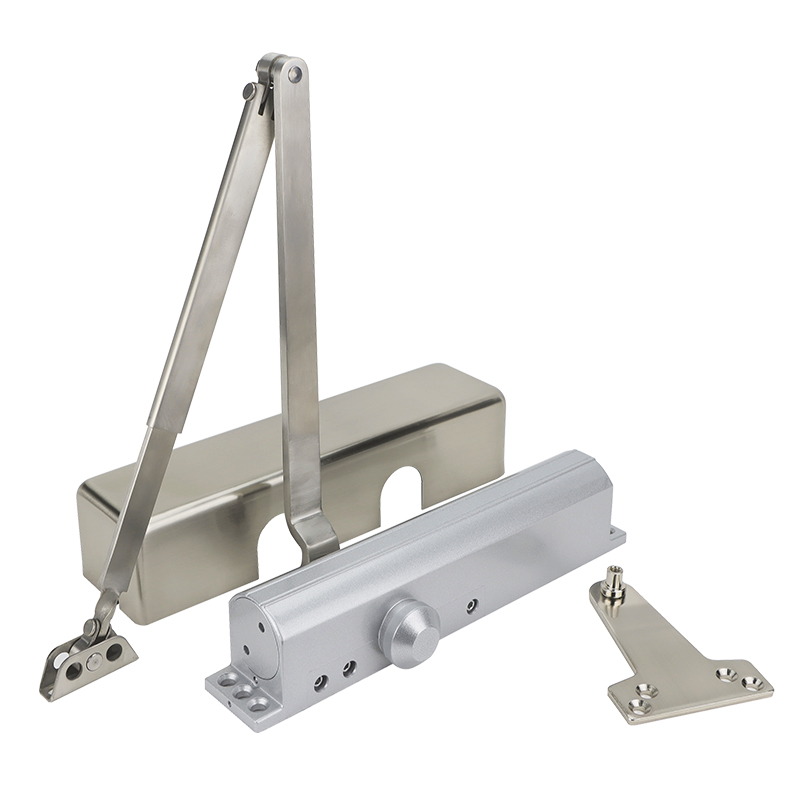
A series-level statement such as “our closers have backcheck” is not enough for a purchase order. Ask for the sub-model list, then write the exact code on the PO.
Which functions get confused with backcheck?
Three come up constantly, and mixing them up sends the wrong part:
- Delayed action (DA): holds a door open briefly before it starts closing. It works on the closing side, not the opening side.
- Hold-open arm (HO): keeps the door at a set angle until someone releases it — a function of the arm rather than the body. Compare the options in this hold-open vs non-hold-open guide.
- Adjustable closing and latching speed: standard tuning on most commercial closers, and separate from backcheck entirely.
- This series is designed for various door types, including wooden and metal doors. Yes, this series features a non-handed design.
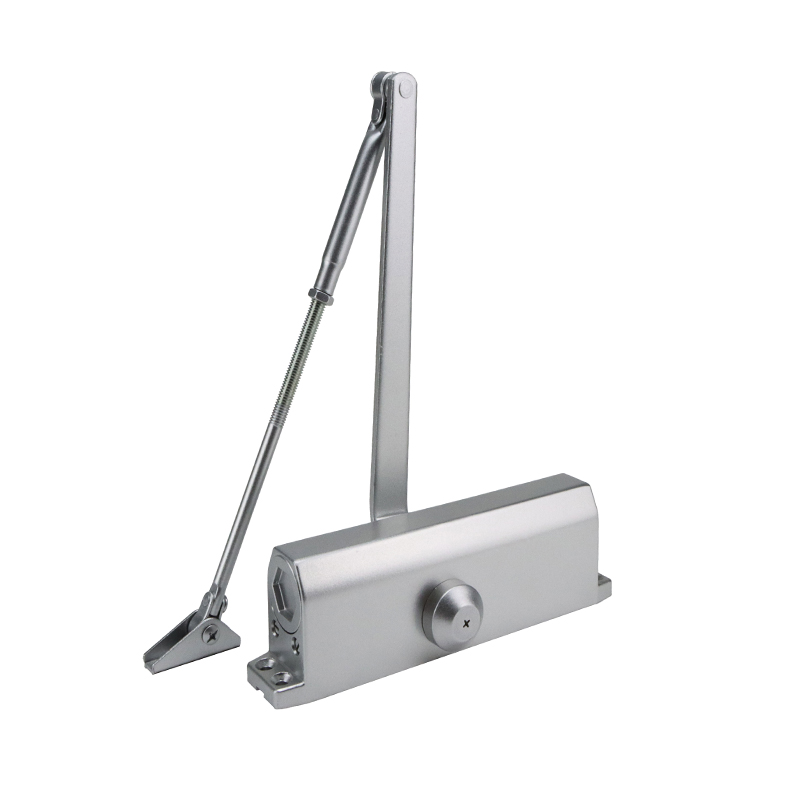
Backcheck moderates opening. Delayed action moderates closing. They solve different problems and are not substitutes.
Backcheck vs Heavy Duty Door Closer: What Is the Difference?
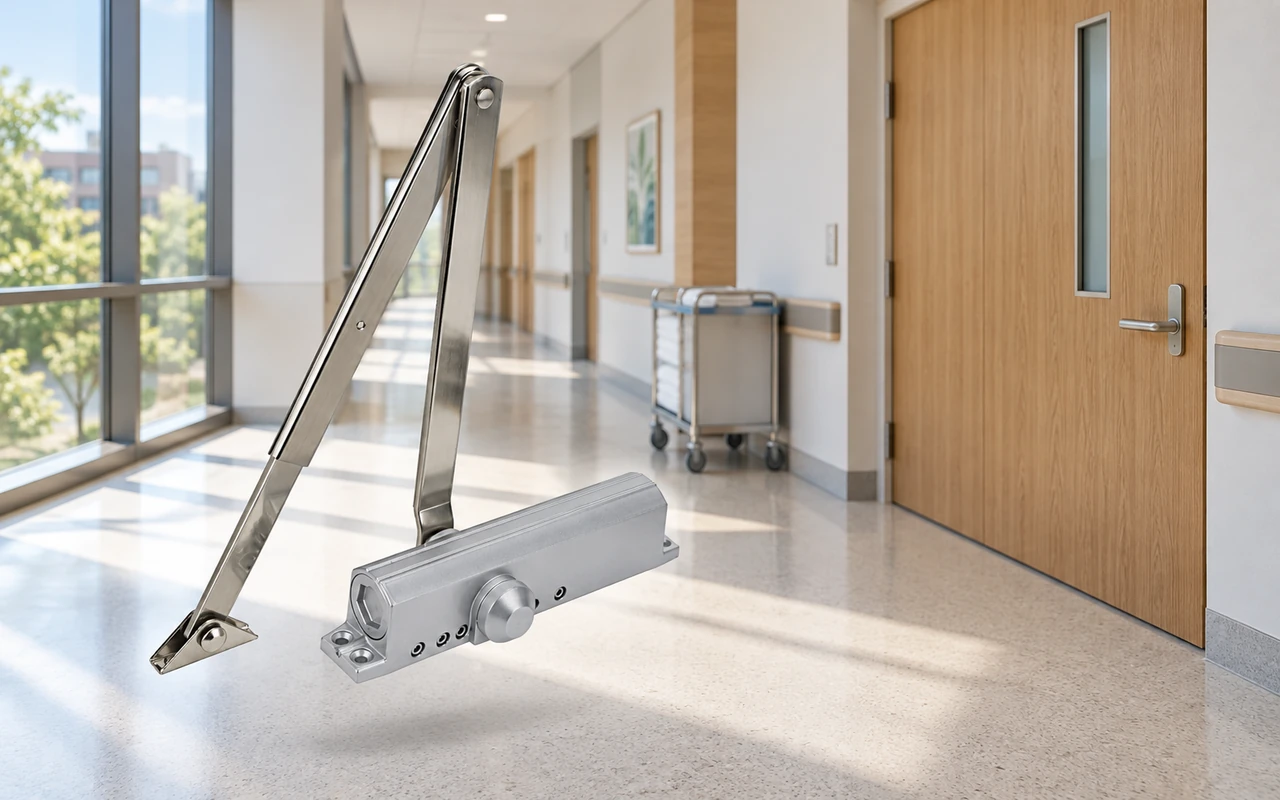
These terms get used as if they were the same thing, and buyers end up with the wrong part. A heavy duty door closer describes how the closer is built and what load it is rated for. Backcheck describes one function inside it.
| Backcheck | Heavy duty | |
|---|---|---|
| What it is | A hydraulic function on the opening swing | A build class and duty rating |
| What it protects | Door, frame, hinges, wall | Performance under traffic and heavy leaves |
| How you spot it | BC in the sub-model code | Cast body, published weight range, grade evidence |
| Typical use | Pushed-open entrances, wind, wide leaves | High-traffic, wide or heavy doors |
You can have a heavy duty door closer without backcheck, and backcheck on a light-duty body that will not thank you for the traffic. Where both are needed, look at the BC and DA sub-models in the 9000 adjustable power series, or at cast-body options such as the OB03 heavy duty cast iron door closer when leaf weight drives the choice.
What Should You Confirm Before You Order?
- The exact sub-model code, with BC confirmed line by line.
- Published leaf weight and width for that sub-model, not the series.
- Mounting style — standard, top jamb, parallel arm or slide arm — and its brackets.
- Whether delay action or a hold-open arm is included or optional.
- Certificates or listings for the exact model and destination market.
- Finish and packaging per variant if you resell under your own brand.
OUBAO builds door closers and magnetic locks in China, with die casting, CNC machining, oil filling and assembly handled in-house, and works with buyers through an OEM/ODM process that starts from the door, the market and the functions you need.
FAQ
Is backcheck the same as delayed action?
No. Backcheck cushions the opening swing so the door does not slam open. Delayed action slows the start of closing so the door stays open a little longer. A closer can have either, both, or neither.
Can backcheck be added after installation?
Not usually. It is built into the hydraulic body or set at the factory, so it is a model choice rather than an accessory. Order the BC sub-model from the start.
Do fire doors need backcheck?
Fire doors must close and latch on their own, and backcheck does not interfere with that — it only affects the opening swing. Check that the exact closer model is documented for the door assembly and the rules you work to, rather than assuming.
Does backcheck make a door harder to push open?
No. It acts late in the opening travel, so the first push feels the same. Users notice a firmer stop rather than a heavier door.
Should Every Busy Door Get Backcheck?
Door closer backcheck cushions the opening swing so a hard-pushed door arrives under control — the reason a backcheck door closer belongs on busy entrances. Specify it where traffic, wind or door width makes a slam likely, confirm the BC sub-model in writing, and keep delayed action and hold-open in their own line items.
Send the door schedule with leaf weight, width, mounting position, daily traffic and the required functions. OUBAO will confirm the suitable sub-model, the arm and bracket list, and a quotation for your market.